Where to Stay in Seoul — Which District Fits Your Trip
How Seoul's stay districts differ: Myeongdong for a first trip, Hongdae for nightlife, Gangnam for business, Jamsil for families, Seoul Station for early departures.
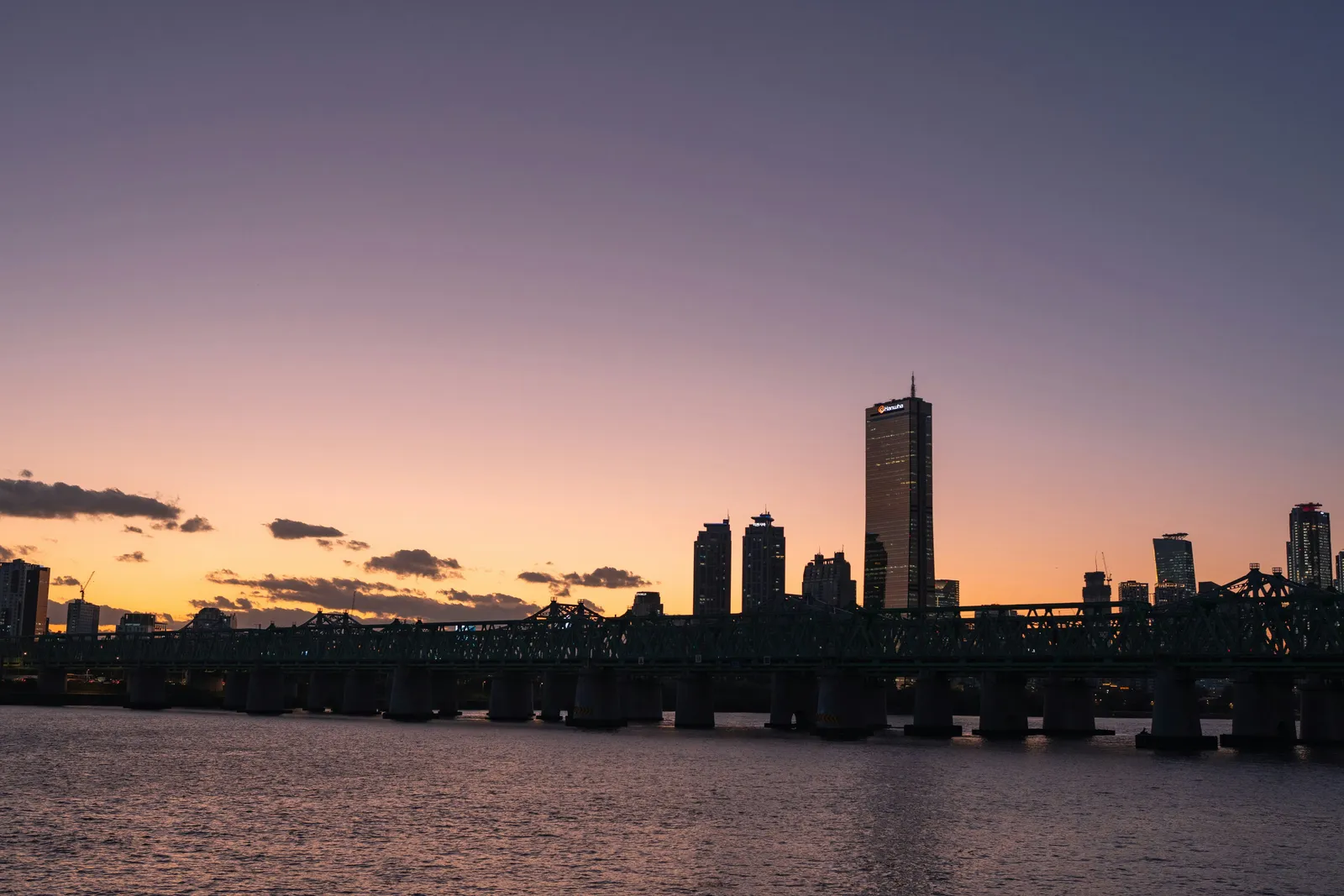 Photo by HYEWON HWANG on Unsplash
 START WITH THE TRIP
Seoul is large but the subway is dense, so the question is not how far your hotel is from things. It is which side of the river you are on, and which lines your station serves. Get that wrong and you will spend forty minutes and two transfers reaching somewhere that looked close on the map.
Most first-time visitors spend their days north of the Han River — palaces, markets, the old city — and most business travel happens south of it. Choosing a base on the wrong side is the single most common mistake.
Choose the area by the trip you are actually taking
| Your priority | Start with | Why | What you give up |
|---|---|---|---|
| First Seoul visit | Myeongdong | Central walks to shopping, markets and the old city | Direct airport rail |
| Airport access and late evenings | Hongdae | Hongik University Station is on the airport railway | Walking access to the palaces |
| Business south of the river | Gangnam | The trip begins near its purpose | Daily old-city travel |
| Lotte World and family facilities | Jamsil | Attraction and full-service hotels share one area | The longest airport run here |
| AREX, KTX or an early train | Seoul Station | The transport hub is the reason to stay | A weaker neighbourhood evening |
If the decision has narrowed to the two most common first-trip bases, use the direct Myeongdong vs Hongdae comparison. If the area is already settled but the party or facilities are not, compare hotels with verified family rooms, lounges for a two-person trip, verified breakfast availability or the narrower full-service luxury set.
PLAN THE DAYS
Find things to do in Seoul
Once you have picked an area, compare tours, attraction tickets and local experiences against the route you will actually take.
GetYourGuide affiliate link — no extra cost to you
THE DISTRICTS
Browse by theme
- and the Airport
Where you sleep in Seoul changes the airport run by 15km. Hongdae is 43.1km from Incheon and Jamsil 58.3km — and the railway, not the distance, is what actually decides it.
- Where to Stay Around Sinnonhyeon
For trips spent south of the river, not around the palaces. All hotels sit by Sinnonhyeon Station; what differs is free-child ages and which rooms take a third guest.
- Myeongdong vs Hongdae
Choose Myeongdong for central sightseeing and Hongdae for airport access and late nights. Six hotels compared on stations, rooms, children and pools.
- Where to Stay in Hongdae
Hongdae suits trips where arrival and departure must be quick: closest to both airports, on the airport train with no transfer. The catch is a daily ride to the palaces.
- Luxury Hotels in Seoul
Four Seoul luxury stays compared on pools, spas, lounges, room conditions, views and location. No permanent price ranking or unsupported best-deal claims.
- Where to Stay in Jamsil
Jamsil works when the trip stays in Jamsil, around Lotte World and its mall. Three hotels compared on child rates and occupancy; the catch is Seoul's longest airport run.
- Jongno Hotels
Three Jongno hotels compared. Each sits 280–370m from a subway station, so the station decides nothing — what you meet outside does. Check-out times differ by an hour.
- Where to Stay in Myeongdong
In Myeongdong the shopping street is 240-440m from every stay here, so walking distance does not decide it. Child pricing, the station you use and checkout time do.
- Where to Stay Near Seoul Station
Three hotels by Seoul Station compared on what a travel day needs: the numbered exit each one uses, the walk with a suitcase, and the AREX express against the all-stop train.
- Hotels for Couples
Seven Seoul hotels for two travellers, compared using verified location, lounge, bar, pool and room facts without unsupported romantic or honeymoon claims.
- Hotels for Families
Eight Seoul hotels with verified family-room inventory, compared on bed layouts, child policies, pools, station access and the trade-offs families feel.
- Hotels with Breakfast
Six Seoul hotels with verified breakfast availability, compared on buffet versus plated service, location and the rate conditions you still need to check.
19 hotels in this city Each with its district, straight-line distances and its own page. Ordered by guest score.
- Dormy Inn Seoul Gangnam
9.0 overall across 23,529 reviews — but location scores only 8.7. The score comes from the public bath, sauna and breakfast, and the walk to the station is uphill.
- Novotel Ambassador Seoul Gangnam
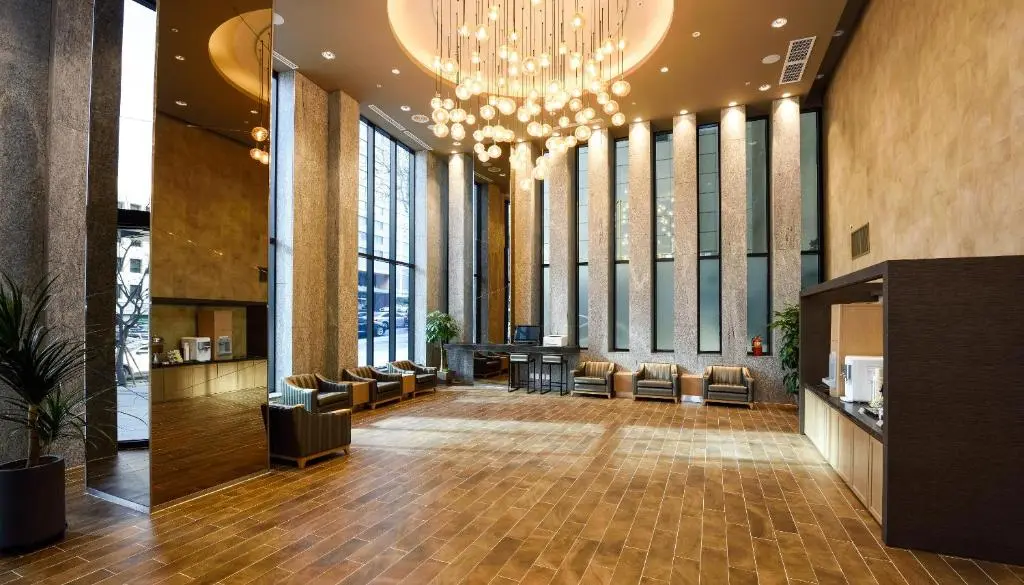
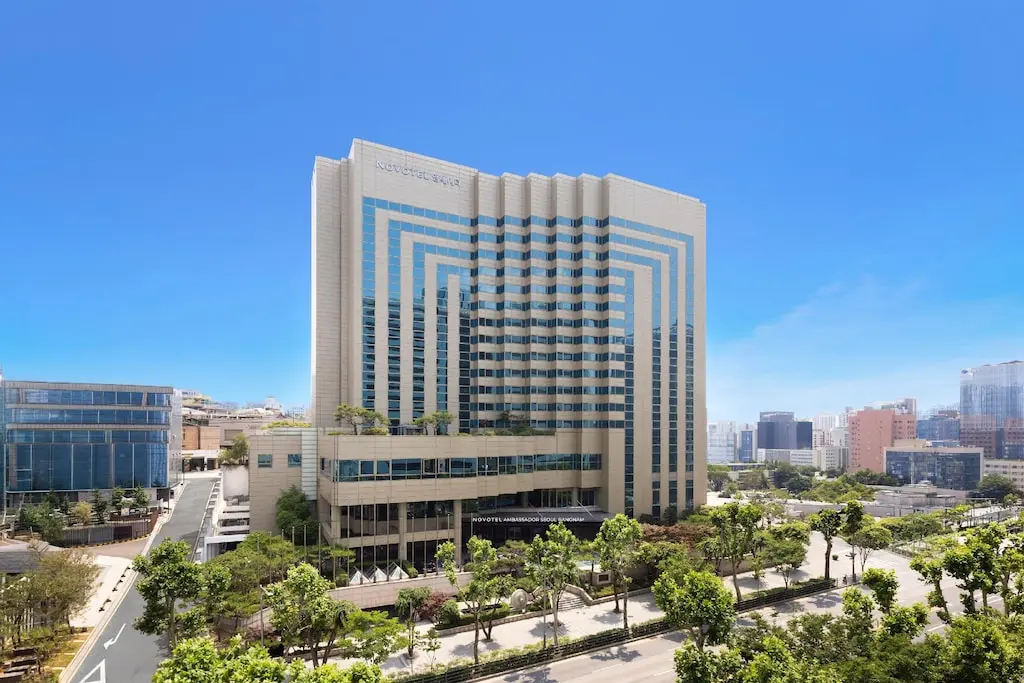
Children up to 15 are listed as staying free, which moves the total more than the rate does. The confirmed room types are all 26-28 sqm doubles, and guests describe an uphill walk from the station.
- Ocloud Hotel Gangnam
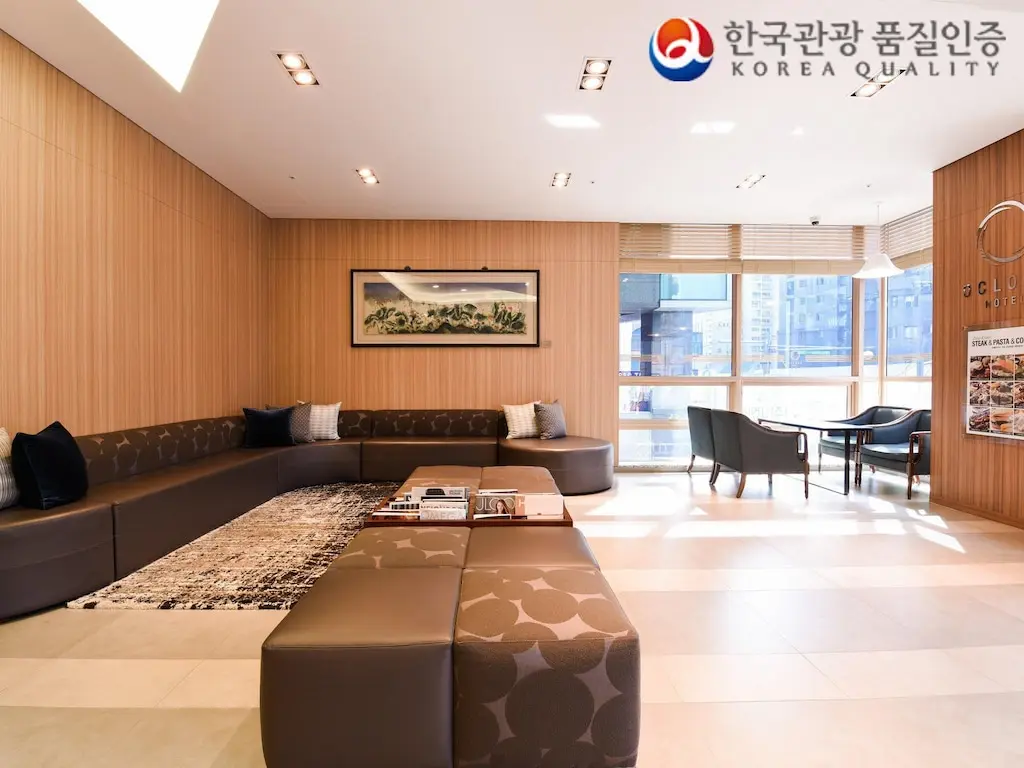
Sinnonhyeon Station is 120m away and Gangnam Station 740m, so a Gangnam trip can happen on foot. Rooms include a microwave and check-in is 2pm — but guests keep mentioning corridor noise.
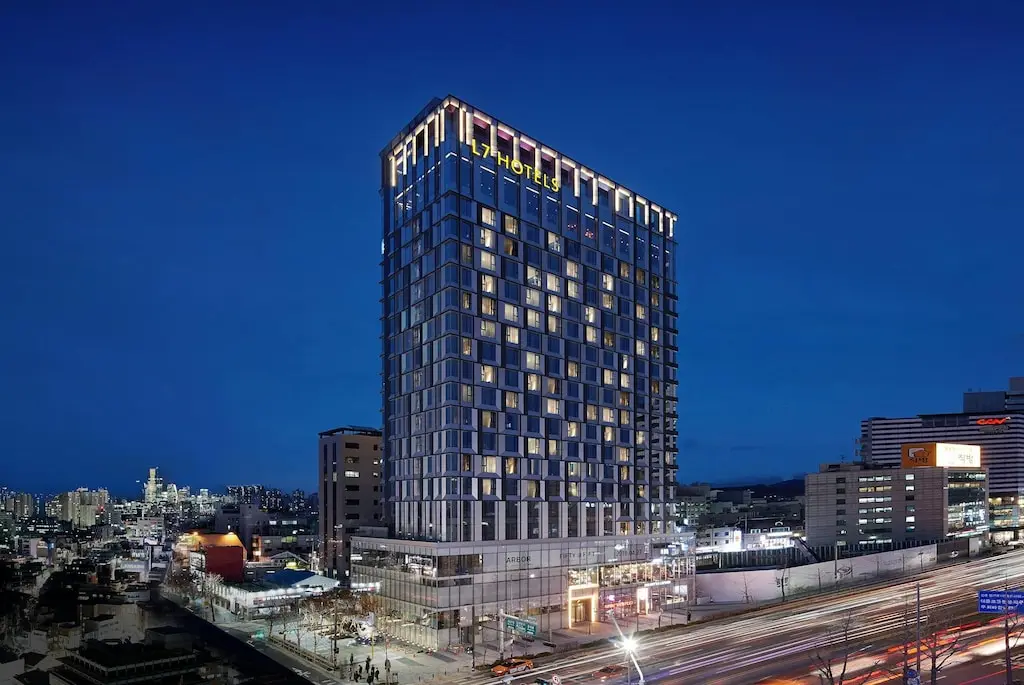
- L7 Hongdae Seoul
Hongik Univ. Station is 240m away and it is on the line that runs to Incheon Airport — so arrival and departure days stay short. The bathroom layout is the thing to check before booking.
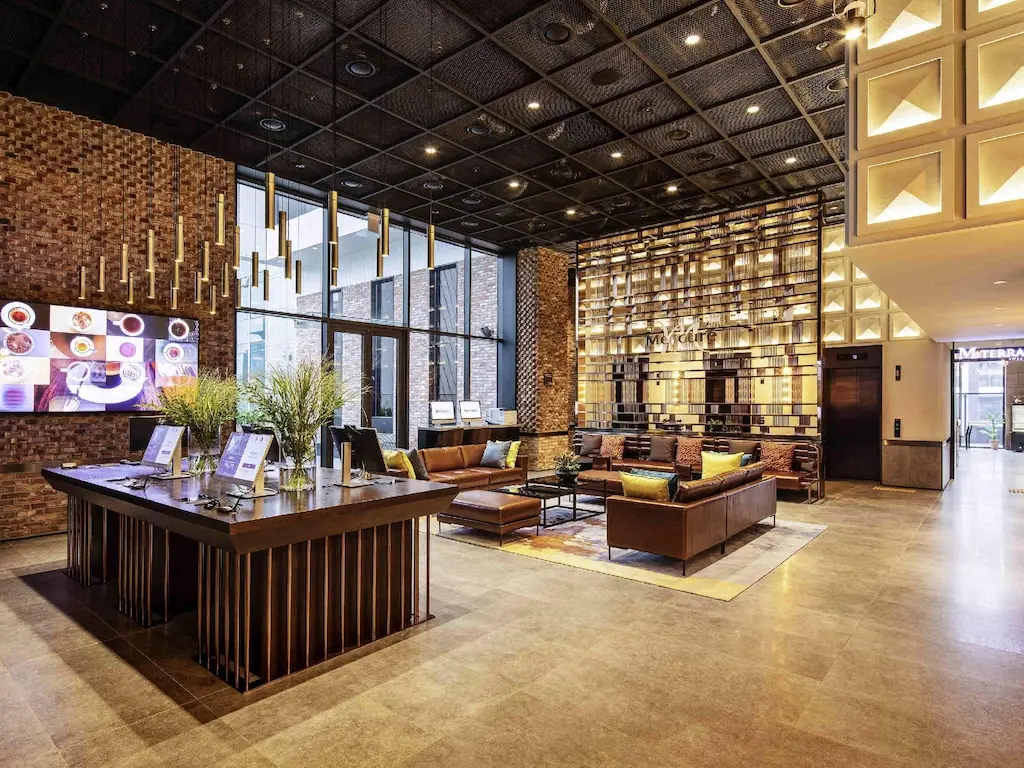
- Mercure Ambassador Seoul Hongdae
200m to the airport-line station and 30m to a convenience store. A Superior Room with three single beds solves a problem Seoul usually creates, and children up to 11 stay free on existing bedding.
- RYSE Autograph Collection
370m from the airport-line station and 10.7km from Gimpo. Editor and Creator rooms come as one king or two doubles, which suits four people — but no two-single twin is confirmed.
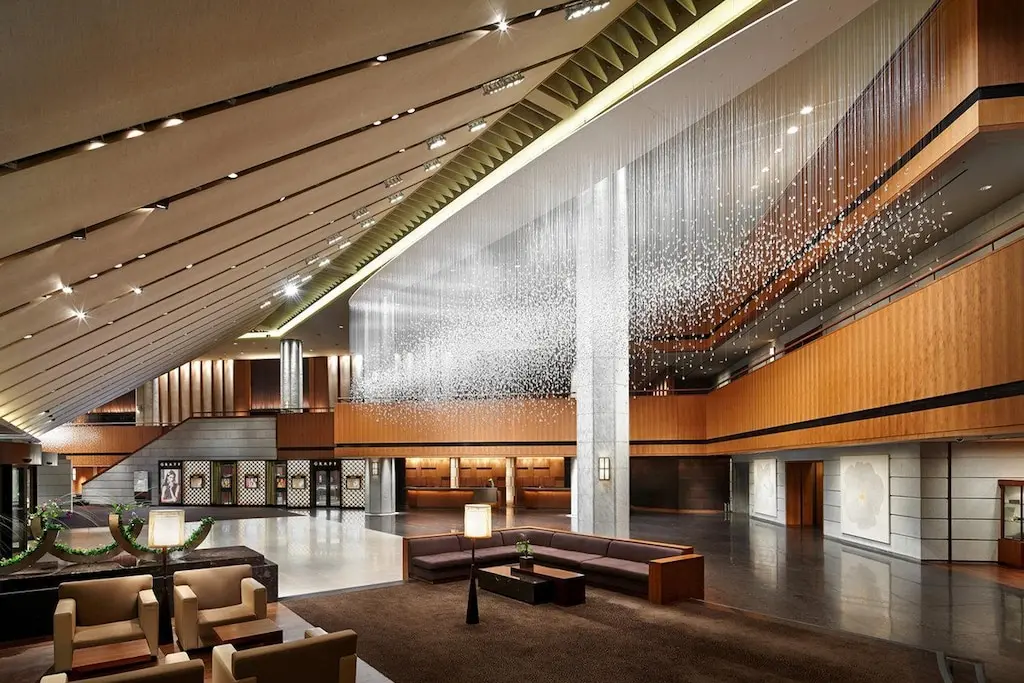
- LOTTE HOTEL WORLD
170m to Lotte World, 250m to Jamsil Station, and several room types that genuinely sleep three or more — rare in Seoul. The catch is that children do not stay free.
- Signiel Seoul
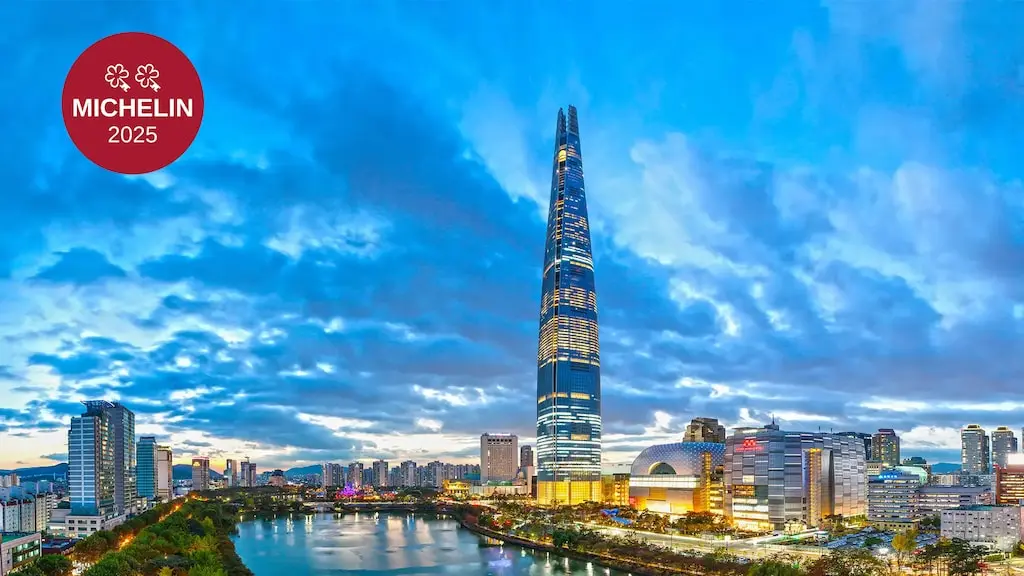
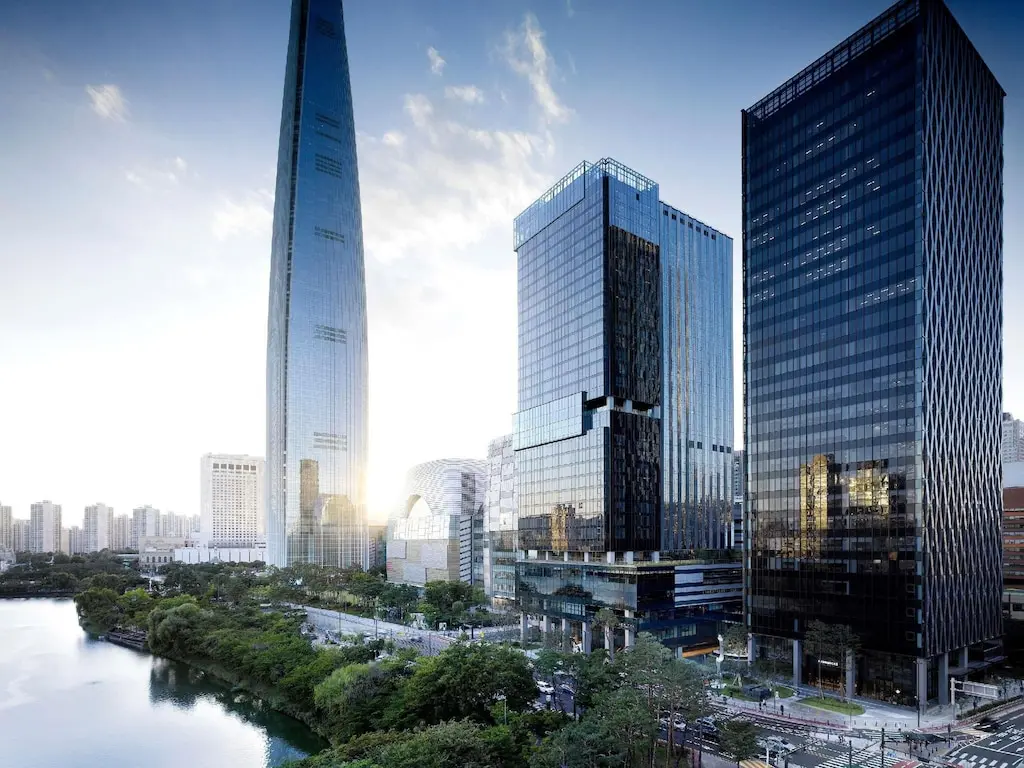
Inside Lotte World Tower, 240m from Jamsil Station, with the highest location and couple scores in the district. The catch: no room type sleeping three, and a pool reviewers call small.
- Sofitel Ambassador Seoul
Built in 2021 beside Seokchon Lake, with free stays for children aged 3 to 11 and a children's pool. The trade-off is 510m to the station and bathtubs that depend on the room type.
- The Shilla Seoul
9.1 overall across 10,330 reviews — the highest here. But outdoor pool and lounge access vary by room type, and children stay free only between ages 2 and 3.
- Hotel Atrium Seoul Jongno
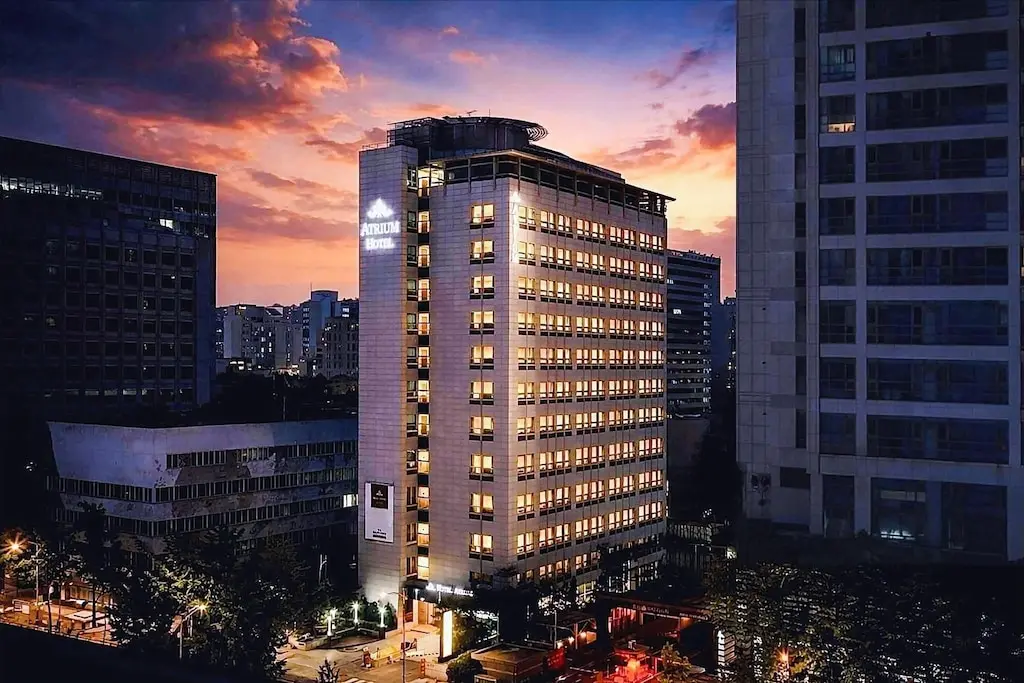
220m to Gwangjang Market, 350m to Jongno 5-ga Station. Dinner never needs planning here — but check-out is 11am, the only one of the three Jongno hotels that is not noon.
- Koreana Hotel
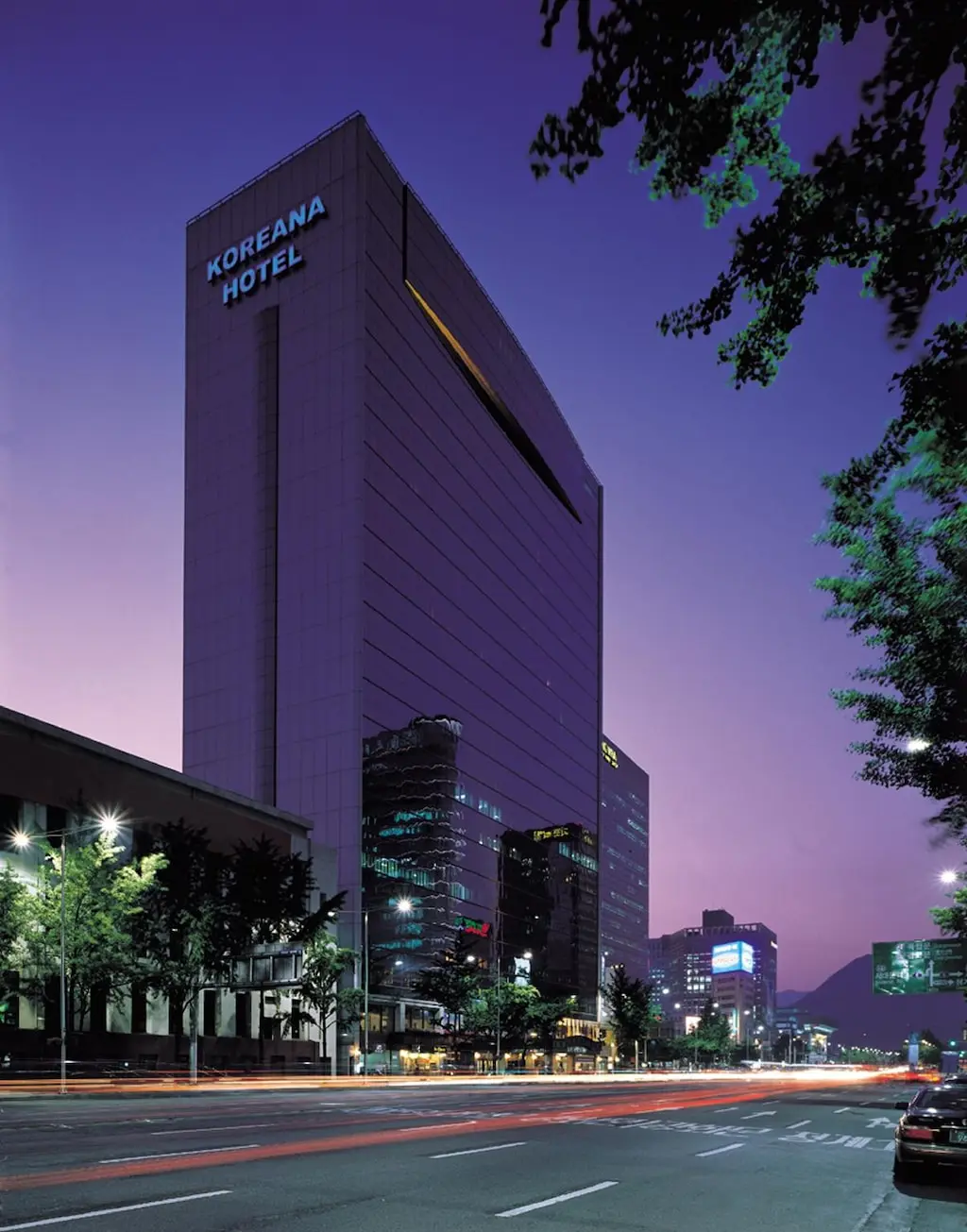
170m to Cheonggyecheon, 320m to Deoksugung, 370m to Gwanghwamun Station. The building dates from 1972 — and reviews keep saying the rooms are two to three times the size of newer hotels at the same price.
- Nine Tree Insadong
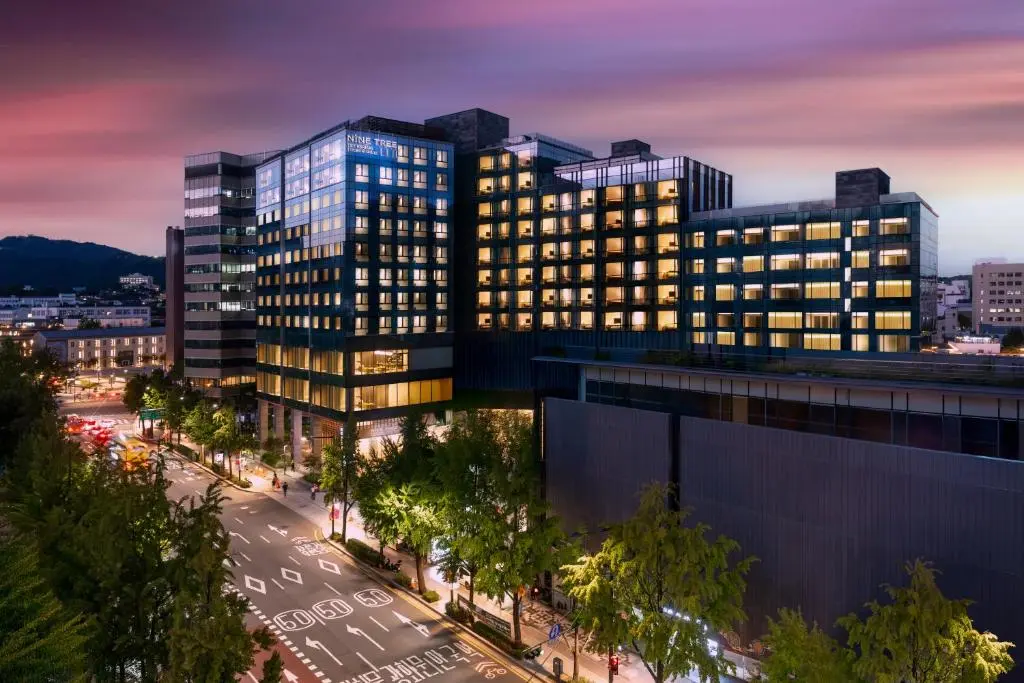
120m to Jogyesa Temple, 280m to Anguk Station. At 26,513 reviews it has the largest sample of any Seoul hotel here, and an unusual number of room types built for three or more.
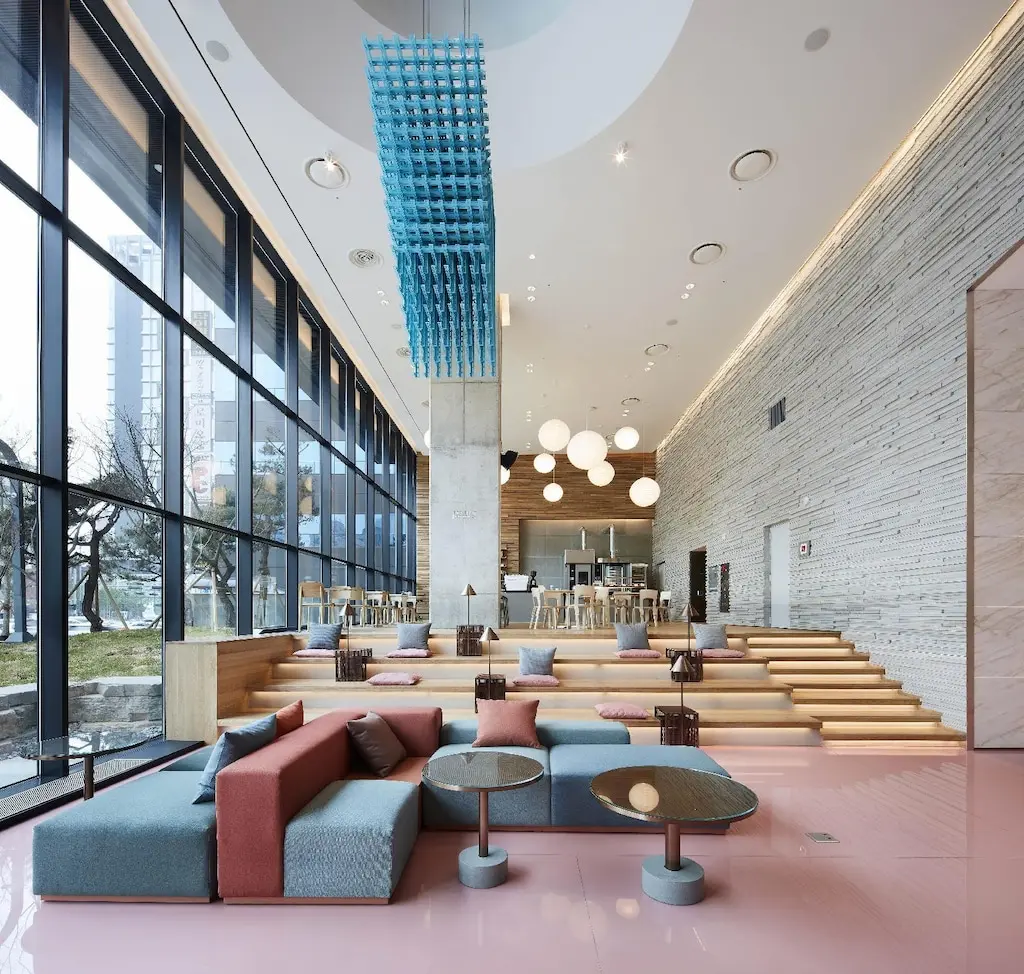
- L7 Myeongdong
Myeongdong Station is 110m away and the location scores 9.7. The trade: children do not stay free, and there is no bathtub and no pool.
- Solaria Nishitetsu Myeongdong
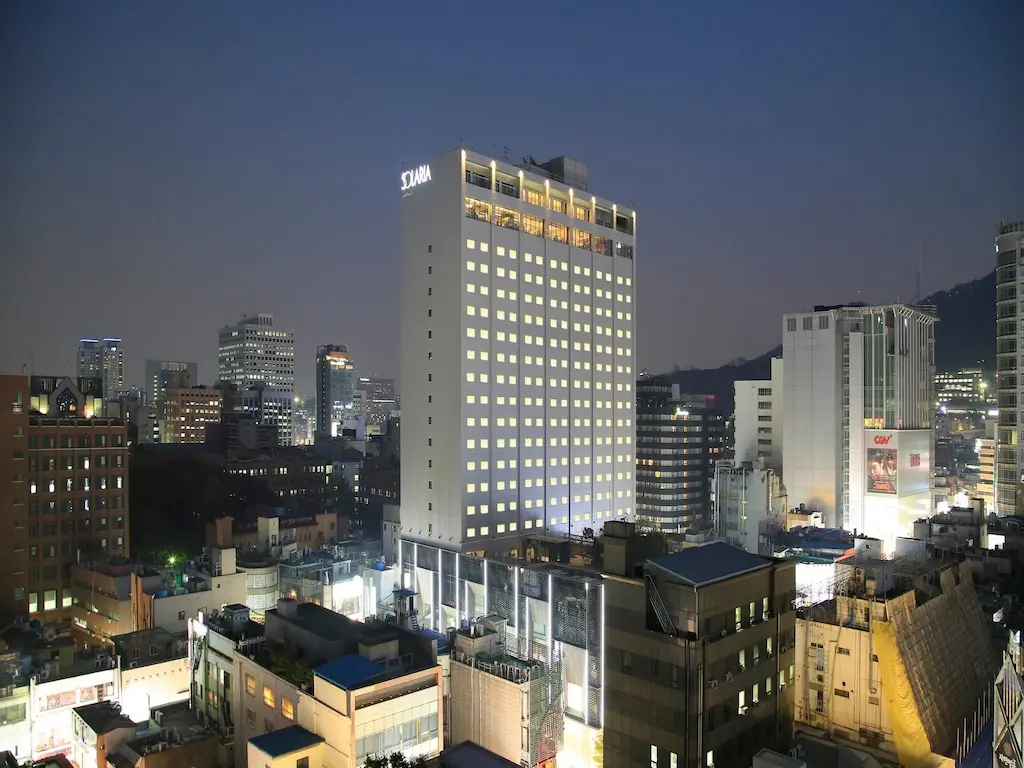
Myeongdong Station is 170m away and the shopping street 240m. Triple rooms exist, which is unusual here — but a seven-year-old is billed as an adult.
- The Grand Lotte Seoul
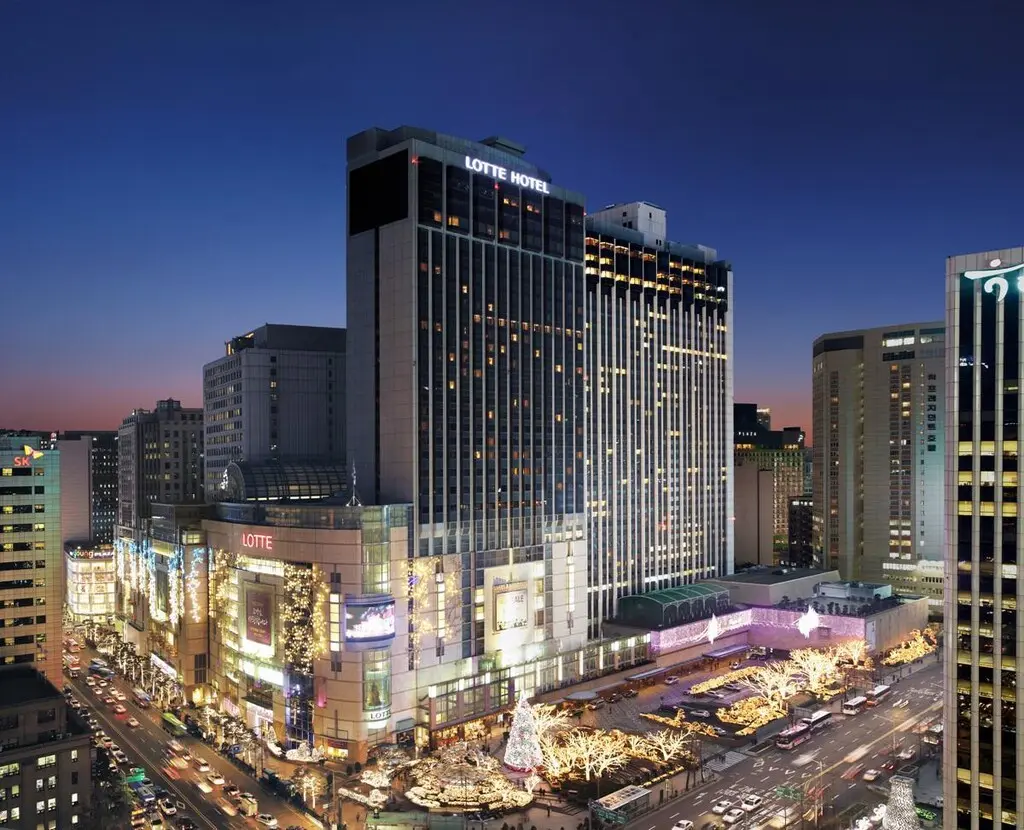
190m to the station, 250m to Myeongdong shopping. With 868 rooms split across two towers, the tower you book changes the stay more than the rating does.
- Four Points Josun Seoul Station
290m from Seoul Station, with an underground link reviewers mention again and again. The same reviews mention train noise just as often.
- Hotel MANU Seoul
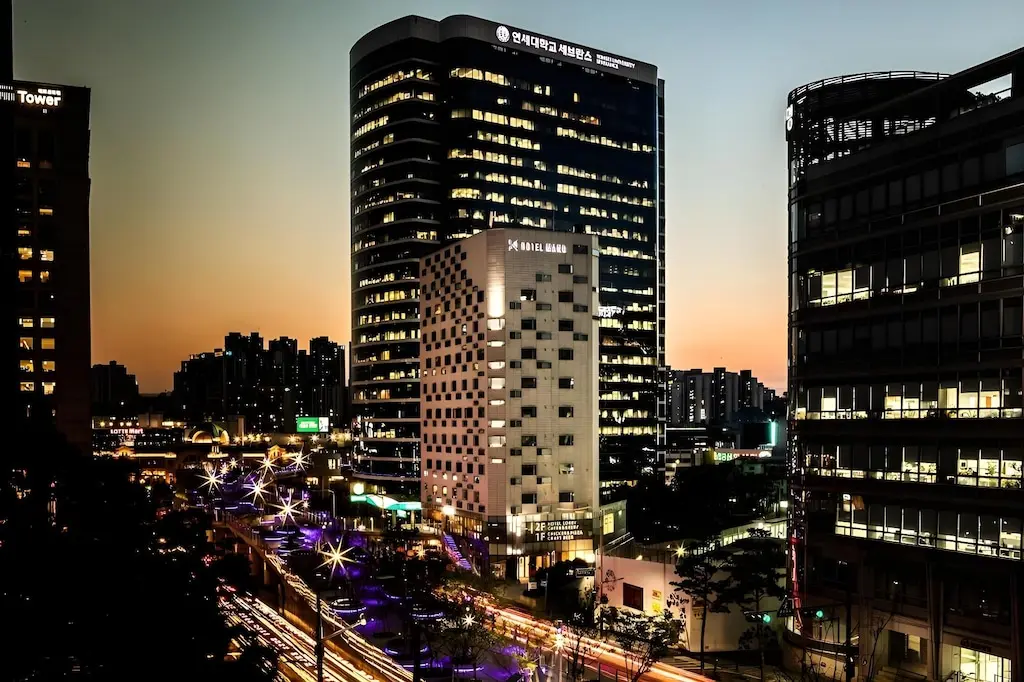
An 80-room three-star between Seoul Station and Namdaemun Market. Breakfast is one composed plate, the rooms run dry in winter, and the view swings on which way you face.
- Ramada Suites Namdaemun
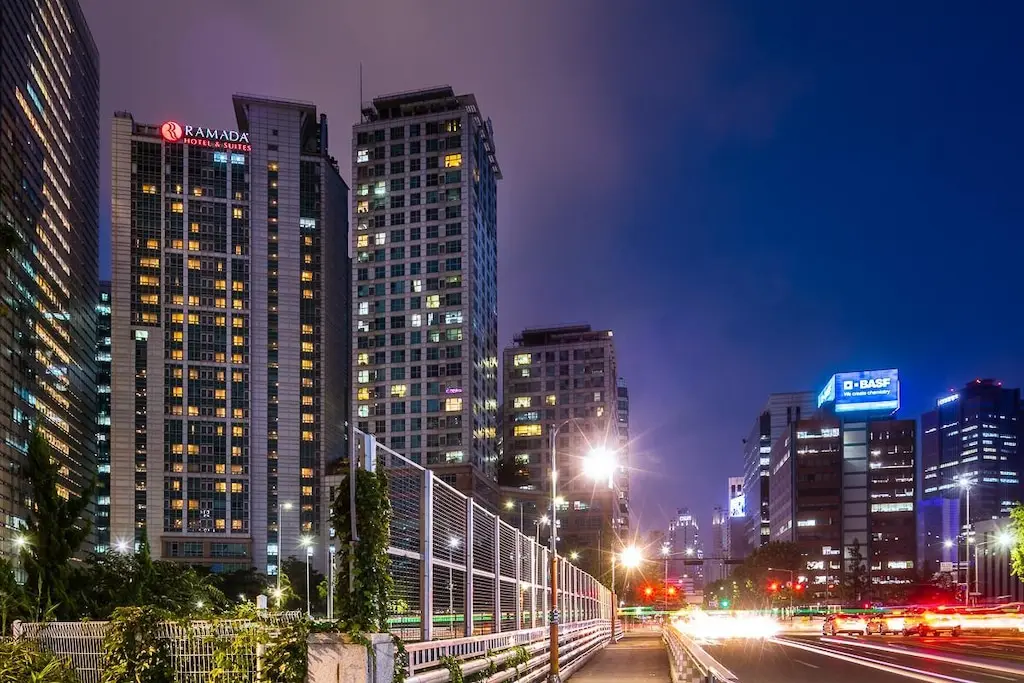
Quadruple rooms, family suites, kitchens and washing machines — an unusual combination in central Seoul. The trade-off is a property reviewers repeatedly describe as dated.
How we choose the stays on this list
- Which lines the nearest station serves, and how many transfers to the places you actually named
- Whether Incheon Airport is reachable without changing trains
- What stays open after 9pm within walking distance
- Realistic room configurations above two people — this is the tightest constraint in Seoul
- Drawbacks raised repeatedly in guest feedback, not by one reviewer
The districts
Myeongdong is the default first-trip base and it earns that for a reason: it sits centrally, the palaces and the old city are reachable without a long ride, and the street-level density means you are never far from food or a pharmacy. The trade-off is that it is heavily tourist-facing — prices at street level run higher and it can feel crowded rather than local. Inside the district the walking distances barely differ, so the decision falls to child pricing and which station you use, set out in how the Myeongdong hotels compare on walking distance and child pricing.
Hongdae is the university and live-music district, and it is the one area where the evening genuinely runs late. It also sits on the airport line, which makes arrival and departure simple. Pick it for nightlife and independent food; avoid it if you want quiet, because the noise is the point. Both airports are closer from here than from anywhere else we cover, and the palaces are a daily subway ride in return — the numbers behind that swap are in how the Hongdae hotels compare on airport distance and bed layout.
Jongno is the old city rather than a shopping district. Where Myeongdong sells you streets of shops, Jongno puts a stream, a covered market and a working temple within a few hundred metres of the door. All three properties sit 280–370m from a subway station, so the station separates nothing — what you meet when you step outside does. The walk to Myeongdong is the number that actually moves, from 900m to 1.7km, and check-out times differ by an hour: Jongno hotels works through it.
Jangchung-dong sits on the eastern skirt of Namsan rather than in the centre. Myeongdong is 2.1km away, which is a subway ride rather than a stroll. What it buys is quiet with two lines in reach, and it is where The Shilla Seoul stands — the highest-scoring property we cover in the city at 9.1.
Gangnam is business Seoul — wide blocks, newer buildings, upscale dining, and the highest concentration of corporate offices. It is efficient if your reason for coming is south of the river. It is also the least walkable at street level: the blocks are long and the distances between things are real. Even on the single Sinnonhyeon axis the station walk ranges from 120m to 450m and the free-child age cap from 6 to 15, which is why one Gangnam answer does not cover it — how the Sinnonhyeon-axis Gangnam hotels compare works through it.
Jamsil works for families. The theme park, the tower and the riverside parks are concentrated in a small area, so a day can happen without transport. It is further east than the others, which is fine if you are staying put and costly if you are commuting into the old city every morning. Incheon sits around 58km out (straight-line) with no direct airport train, so the walking you gain at the park is paid back on arrival day — the full trade is in how Jamsil buys Lotte World on foot and pays for it at the airport.
Seoul Station is the transit choice rather than the atmosphere choice. It is where the airport train and the intercity high-speed rail meet, so it makes sense for early departures or a trip that continues to another Korean city. Evenings are its weak point, and there is a second catch: the hotel standing closest to the station is the furthest from Namdaemun Market and Myeongdong. That inversion is worked through in how the Seoul Station hotels rank in reverse once you walk anywhere else.
Worth knowing about Seoul
Rooms for three or more are genuinely scarce outside the larger international properties, and Korean hotels enforce occupancy limits more strictly than you may expect. If your party is above two people, confirm the room configuration before booking rather than assuming an extra bed is available.
The airport connection differs by district in a way that matters on short trips: some areas connect directly, others need a transfer with luggage. We note this per property rather than describing the city as a whole, because the difference is the arrival day.
The same logic applies if Busan is on the itinerary: the high-speed trains leave from Seoul Station, so where you sleep in Seoul shapes the day either side of the ride. At the other end the split is between the beach and the interchange — Where to Stay in Busan puts the distance to the sand and the distance to the station next to each other.