Where to Stay in South Korea — Choosing by District
How to choose which part of a Korean city to stay in — transit access, what is walkable after dark, and how districts differ before you commit to a hotel.
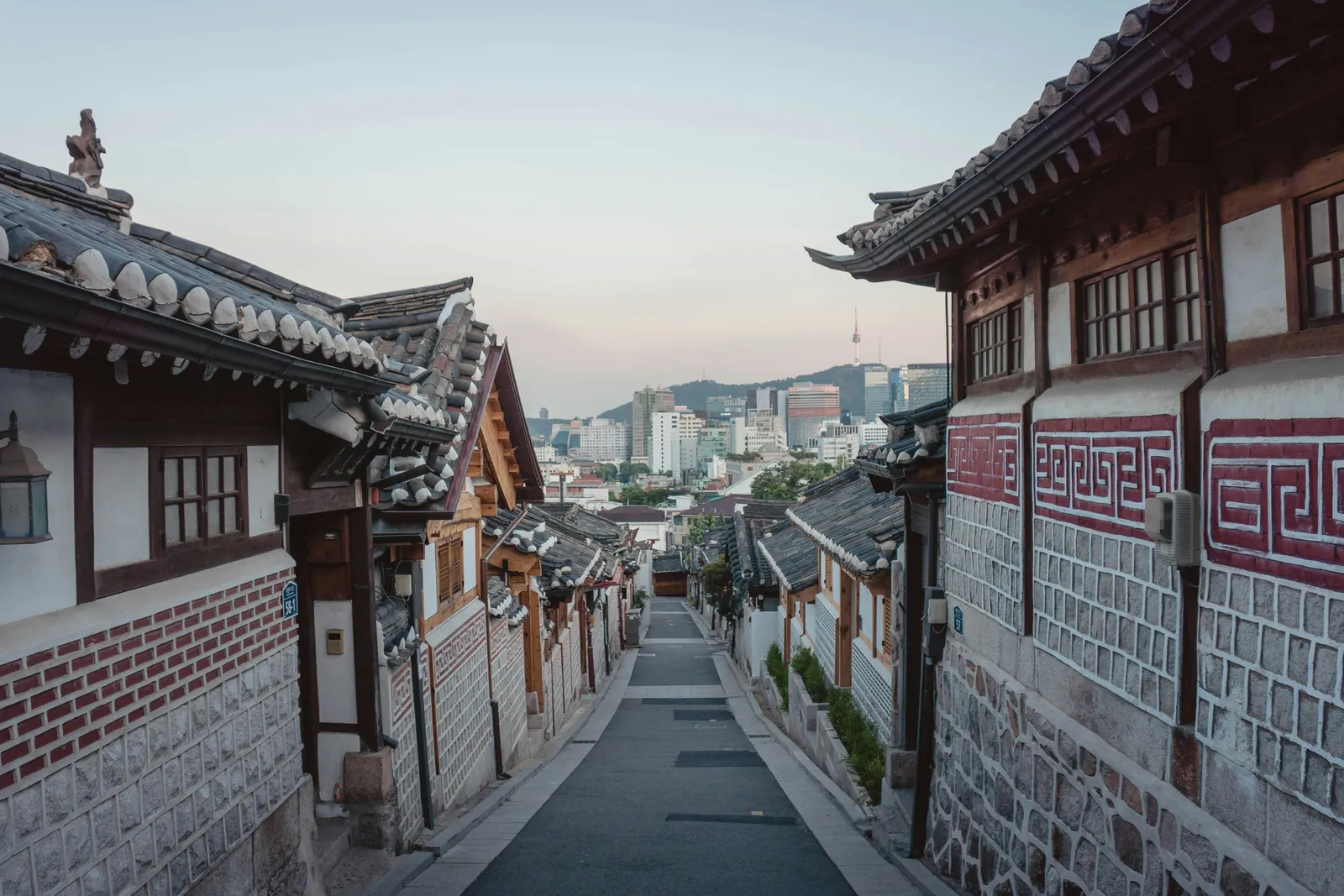 Photo by Y K on Unsplash
 THE DISTRICTS
Cities
- Seoul
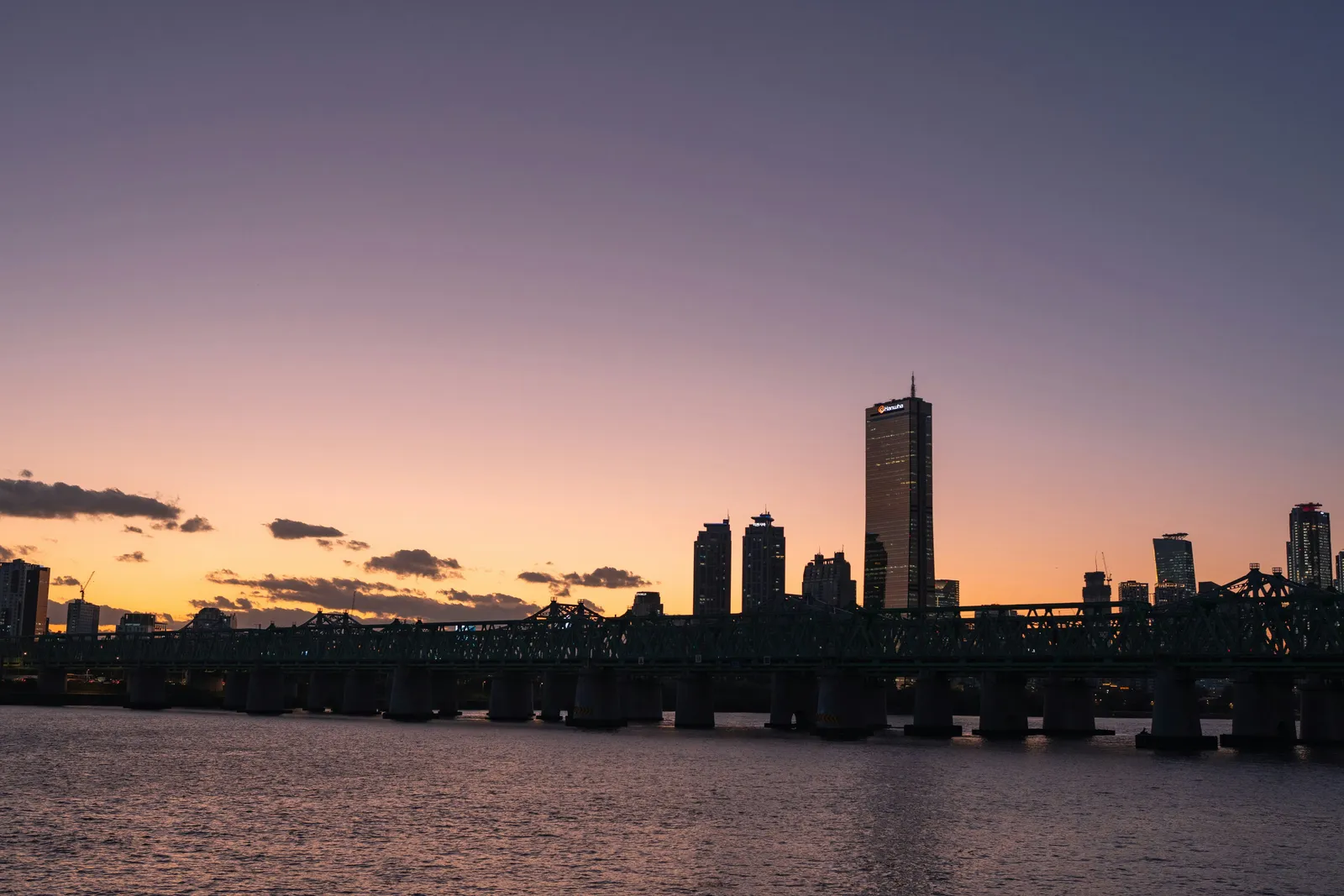
How Seoul's stay districts differ: Myeongdong for a first trip, Hongdae for nightlife, Gangnam for business, Jamsil for families, Seoul Station for early departures.
- Busan
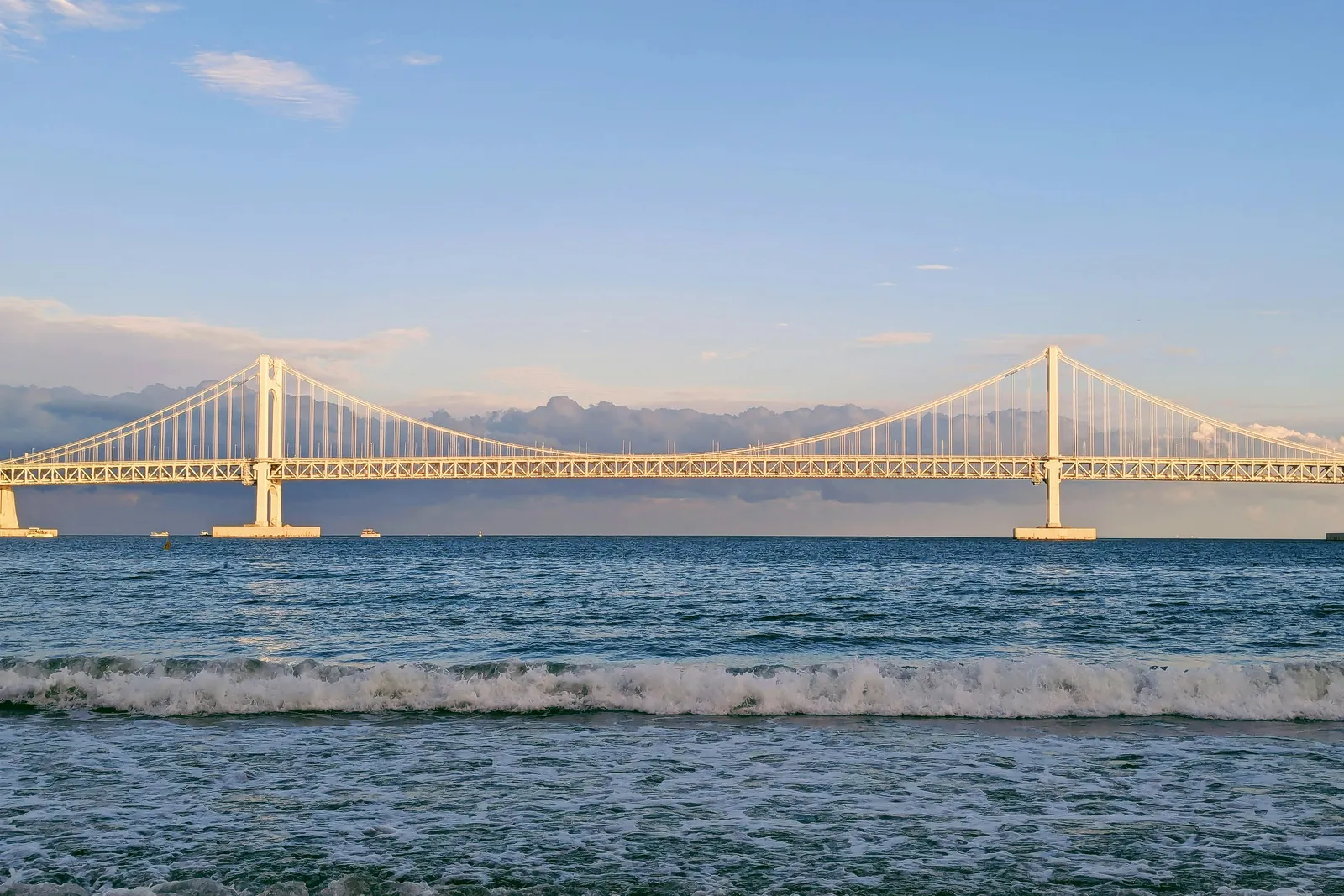
How Busan's stay districts differ: Haeundae for the swimming beach, Gwangalli for the bridge at night, Seomyeon for crossing the city, Nampo for walking, Gijang for staying put.
- Jeju
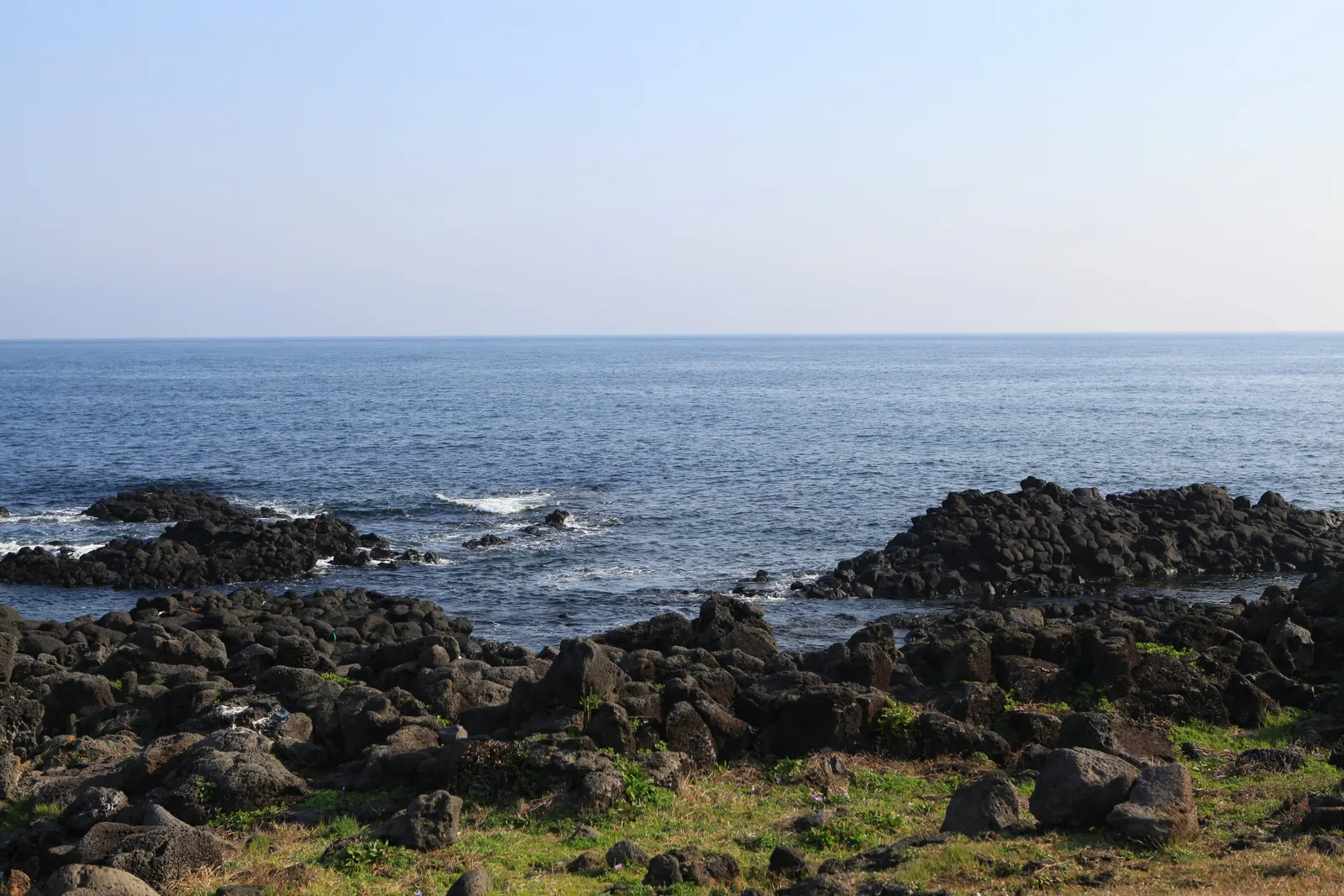
Picking a base in Jeju comes down to two questions: which part of the island suits your days, and whether you will drive. Eight areas, for trips with or without a car.
READ BEFORE YOU BOOK
Browse by theme
- Seoul and the Airport
Where you sleep in Seoul changes the airport run by 15km. Hongdae is 43.1km from Incheon and Jamsil 58.3km — and the railway, not the distance, is what actually decides it.
- Seoul Where to Stay Around Sinnonhyeon
For trips spent south of the river, not around the palaces. All hotels sit by Sinnonhyeon Station; what differs is free-child ages and which rooms take a third guest.
- Seoul Myeongdong vs Hongdae
Choose Myeongdong for central sightseeing and Hongdae for airport access and late nights. Six hotels compared on stations, rooms, children and pools.
- Seoul Where to Stay in Hongdae
Hongdae suits trips where arrival and departure must be quick: closest to both airports, on the airport train with no transfer. The catch is a daily ride to the palaces.
- Seoul Luxury Hotels in Seoul
Four Seoul luxury stays compared on pools, spas, lounges, room conditions, views and location. No permanent price ranking or unsupported best-deal claims.
- Seoul Where to Stay in Jamsil
Jamsil works when the trip stays in Jamsil, around Lotte World and its mall. Three hotels compared on child rates and occupancy; the catch is Seoul's longest airport run.
Hotel guides · 6 hotels A few from every city. Each city page carries the full list.
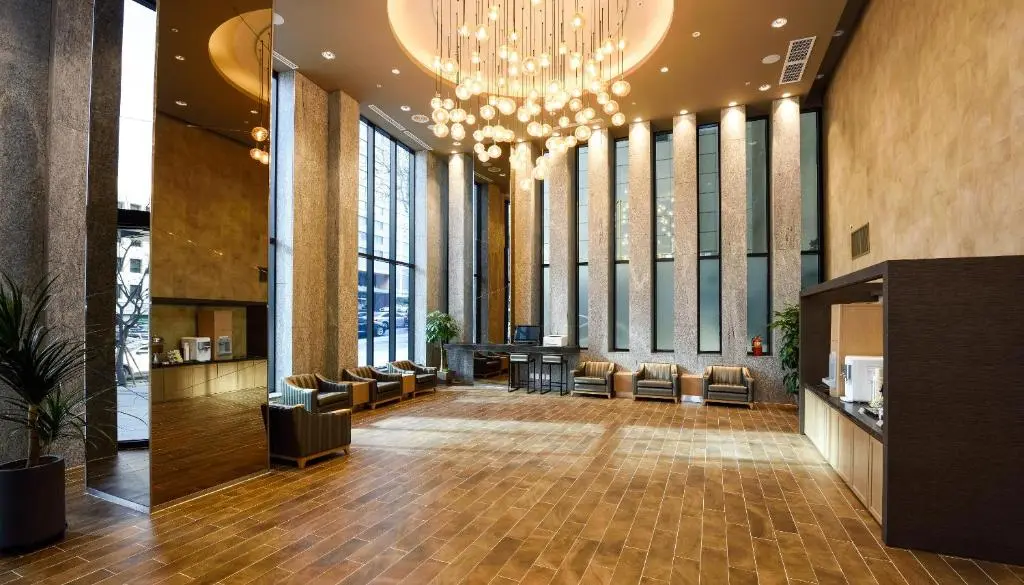
- Dormy Inn Seoul Gangnam
9.0 overall across 23,529 reviews — but location scores only 8.7. The score comes from the public bath, sauna and breakfast, and the walk to the station is uphill.
Seoul
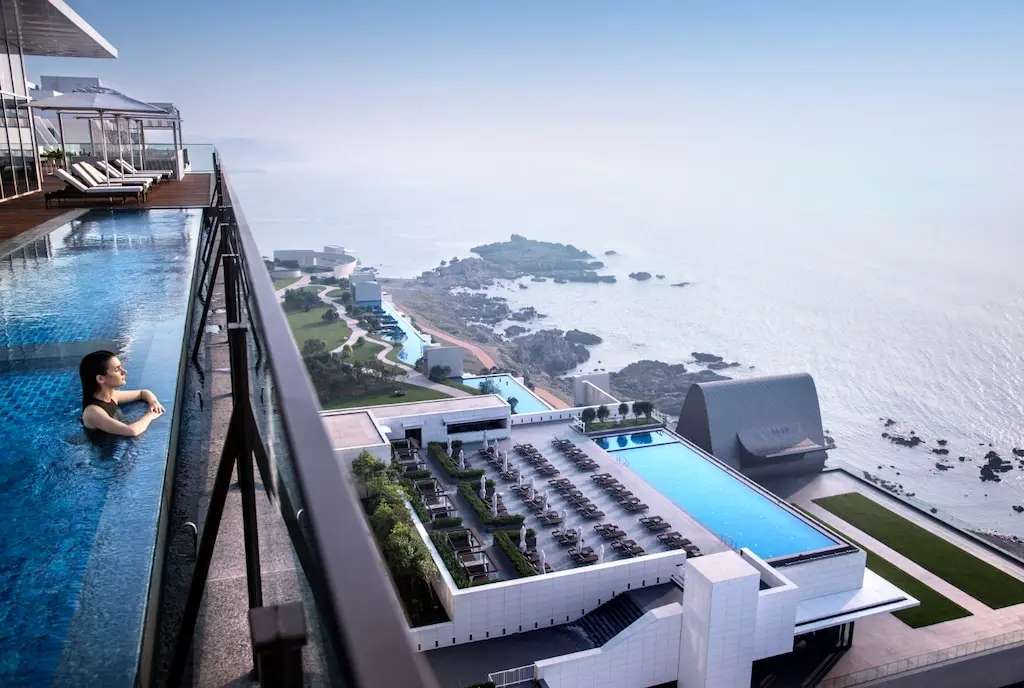
- Ananti at Busan Cove
A five-star on the Gijang coast where pools, a sauna, a bookshop and a buffet mean the day never has to leave the grounds. The outdoor infinity pools are seasonal.
Busan
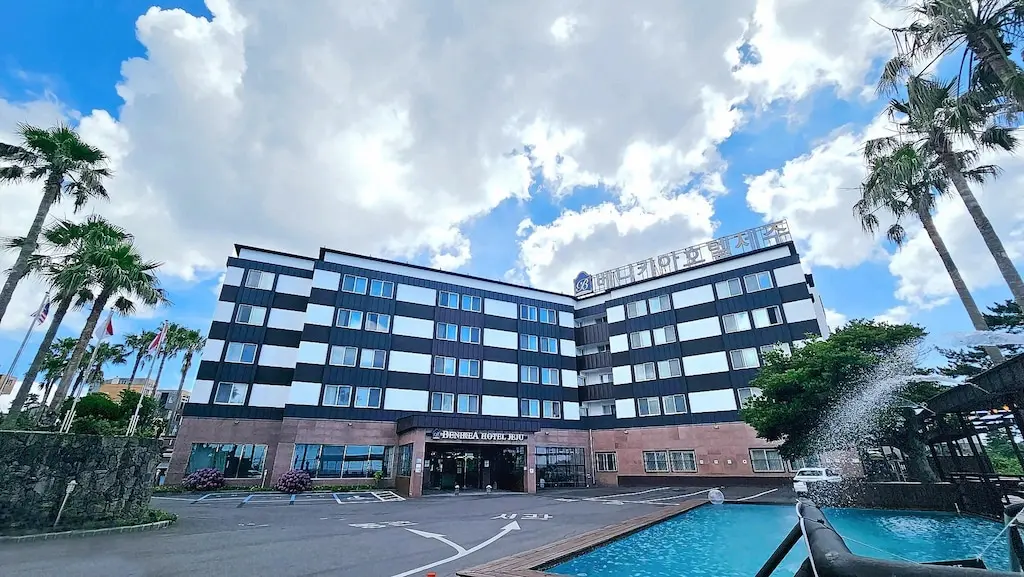
- Benikea Hotel Jeju
One of only three hotel-type properties on the Aewol coast road, with a pool and triple rooms against a building guests repeatedly call dated.
Jeju
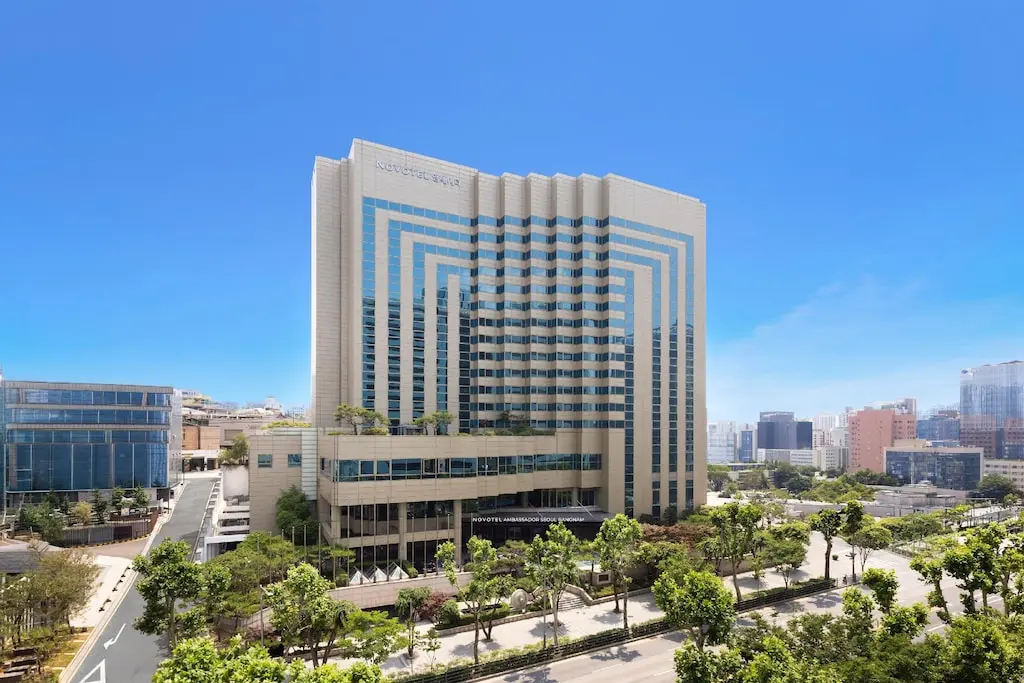
- Novotel Ambassador Seoul Gangnam
Children up to 15 are listed as staying free, which moves the total more than the rate does. The confirmed room types are all 26-28 sqm doubles, and guests describe an uphill walk from the station.
Seoul
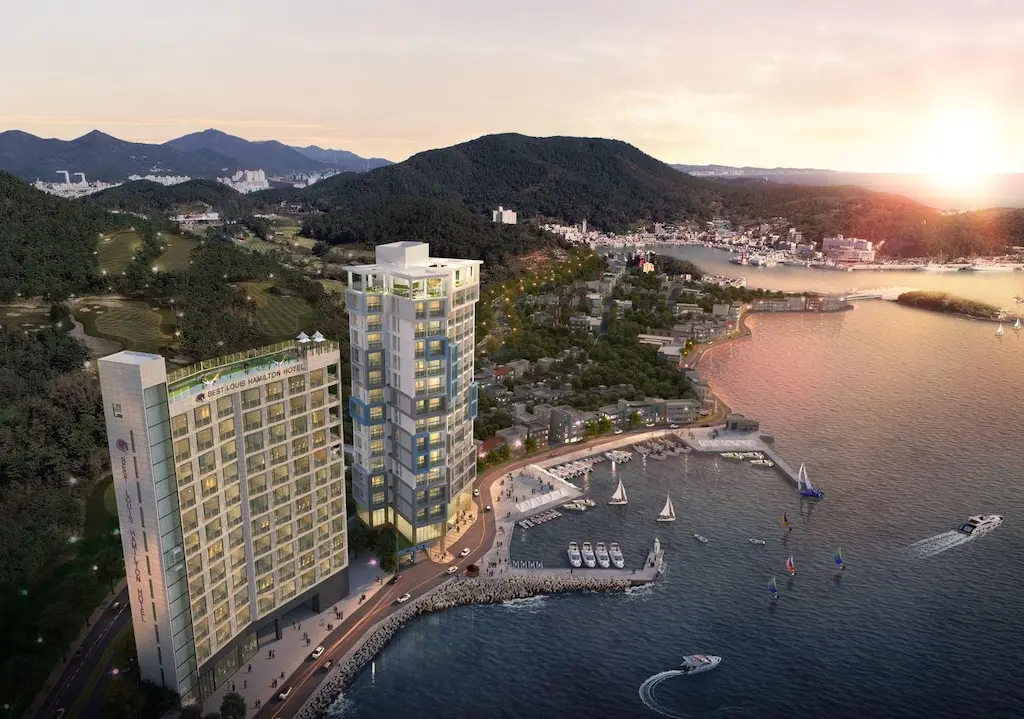
- Best Louis Hamilton Ocean Terrace
A Gijang coastal property where all four verified room types carry an ocean label and the bath is in the room.
Busan
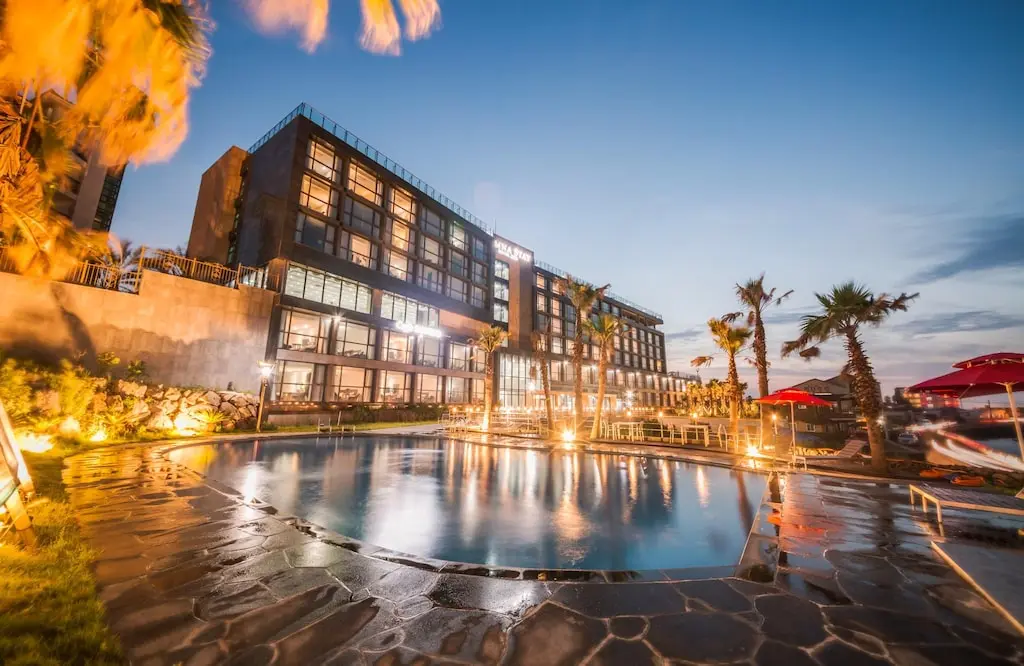
- Tamna Stay Hotel Jeju
The closest Aewol property to the airport, where reviews split hard between the sea-facing rooms and everything else.
Jeju
Recently updated
- Kolon Seacloud Hotel
- Park Hyatt Busan
- Ramada Encore Haeundae
- Aimi Jeju Beach Hotel Hamdeok W
- L7 Hongdae Seoul
In Korea the first real decision is rarely which city. It is which district — and specifically which subway lines you land on. Cities here are dense and well connected, so two hotels equally far from a landmark can produce completely different days depending on how many times you change trains.
That is why listings look interchangeable: price and star rating converge, and the things that actually change your trip — the walk from the station, what is open after 9pm, whether the airport needs a transfer — are not in the listing at all. The split inside a city is what the city guides handle: see how Seoul divides by subway line and by river.
How we choose the stays we cover
- Which lines the nearest station is on, not just how far the station is
- Whether the airport is reachable without changing trains, and from which stations
- What is genuinely walkable in the evening versus what needs a taxi
- Realistic room configurations for your party size, especially above two people
- Drawbacks that come up repeatedly in guest feedback, not from a single review
Rates in Korea move sharply with season, festivals and domestic holidays, so we never state a price as fact. We set out the conditions you need to judge a property and send you to the live rate at booking time.
Worth knowing before you book
Room sizes run smaller than the equivalent grade in Southeast Asia: a “twin” is often two single beds in a compact footprint, and rooms for three or more are limited outside the larger international chains — the most common booking problem for families.
Check-in is commonly mid-afternoon and firmly held, which decides whether your first afternoon is usable or spent waiting.
Paying for the subway is the part you cannot sort out from home
Everything above turns on which lines you land on. What you tap at the gate decides whether that plan actually runs, and it is the one piece of the trip that has to wait until you arrive.
Tapping a foreign credit card straight onto a subway gate is not possible yet. What you can do is buy a transport card from the ticket machines inside a subway station and top it up there with an overseas card, which is the realistic route on arrival day.
T-money is the default card. It is sold in convenience stores across the country, reloaded at station machines, and accepted on the subway, on buses, in taxis and at some shops — one card covers the late-night taxi as well as the morning train.
The Climate Card gets you out to the airport, not in from it
Seoul’s Climate Card adds short passes on top of that: 1, 2, 3, 5 and 7 days at 5,000, 8,000, 10,000, 15,000 and 20,000 won, with the physical card another 3,000 won. They cannot be loaded ahead of time — the clock starts the day you charge one — and they leave out the city bike share and the Han River bus. They also exclude the Sinbundang Line and the GTX, which is where the district choice comes straight back: a pass is only a saving if the lines serving your station sit inside it.
The airport rule is the part worth reading twice, because it does not work both ways. The pass covers the airport line as far as Gimpo Airport to Seoul Station, and the city allows one exception beyond that: board at a station inside the covered stretch and you may get off at Incheon Airport Terminal 1 or 2 at no extra charge, but you cannot start a journey at Incheon Airport on the card. So it works on the last morning and is no use at all on the day you land — which is the day you would still be buying it.
That narrows where the pass earns its keep. Only six Seoul stations sit on the airport line — Seoul Station, Gongdeok, Hongik University, Digital Media City, Magongnaru and Gimpo Airport — so “on the airport line” is a far smaller set of districts than “near a subway station”, and which of those districts suits you is a separate question.
One date to write down: the 30-day version of the card is being retired on 1 October 2026 and folded into a successor pass built on the national K-Pass scheme, with prepaid top-ups stopping on 31 August 2026. The short passes above — the ones a visitor actually buys — carry on unchanged. The closure notice says nothing about whether the Incheon Airport exception survives the switch, so treat that detail as worth re-checking from October.
The airport train runs as two products, and only one of them takes a transport card
| Express | All-stop | |
|---|---|---|
| Terminal 1 to Seoul Station | 43 minutes | 59 minutes |
| Terminal 2 to Seoul Station | 51 minutes | 66 minutes |
| Fare | 13,000 won, adult (list price 18,100–18,700 won) | Charged by distance |
| Seat | Reserved | Unreserved |
| Buying it | Online, or the machines beside the Express Train Information Center — Seoul Station B2F, Terminal 1 B1F, Terminal 2 B1F | Machines, or the shop inside the station |
| Paying | Cash, credit card, smart pay. Transport cards are not on the list | Single Journey card, or a prepaid or postpaid transport card |
| At the gate | Scan the QR code on the ticket | Tap the card |
The all-stop service calls at every station on a 14-station line, which is where the extra quarter of an hour goes. The point of the table is that the Express is not the same journey with a faster tap — it is a separate ticket with a seat number, bought online or at a counter, and the operator’s payment options for it do not list transport cards. Land, buy a T-money card and walk to the platform, and the train you get on is the all-stop one. That is a perfectly good plan; it is just worth choosing it rather than discovering it with luggage in hand.
Fares and pass prices are set by the operators and do change; everything in this section was checked on 10 August 2026.
Entry rules split by passport, and the K-ETA waiver ends on 31 December 2026
Checked 10 August 2026. Entry rules move at short notice, and getting one wrong means being refused at the gate rather than mildly inconvenienced. Treat what follows as orientation and confirm on the official sites before you fly.
K-ETA is waived for arrivals up to 31 December 2026. Nationals of the designated countries — the United States, the United Kingdom, Canada and Australia among them — enter without applying for it. The waiver has been renewed a year at a time since 2023 and nothing has been announced for 2027, so a January trip is something to re-check rather than assume.
Waived and not required are different things, and that is where people get caught. Ireland is the clean example: it is not on the waiver list, it appears on the K-ETA’s own list of eligible countries with a 90-day stay, and the Korean embassy in Dublin tells Irish nationals to apply and hold the approval before travelling.
| Passport | K-ETA before you fly | Visa-free stay |
|---|---|---|
| United States | Waived to 31 December 2026 | 90 days |
| United Kingdom | Waived to 31 December 2026 | 90 days |
| Canada | Waived to 31 December 2026 | 6 months |
| Ireland | Not waived — apply and wait for the approval | 90 days |
Canada’s allowance is roughly twice what the others get, which is what makes a slow multi-city trip possible without a visa. Other passports differ, and the current list lives on the official site rather than in any guide.
If you do apply, it costs 10,000 won plus a card fee of about 3%, and none of it comes back if you are refused. A separate group is excused from applying whatever passport they hold: diplomatic and official passport holders, serving military under the status-of-forces agreement, crew and seafarers, ABTC holders, transit passengers, registered foreign residents and visa holders — and, the line that matters to families, anyone aged 17 or under or 65 or over on the date of entry.
Being waived is not the same as having nothing to do. Applying for a K-ETA voluntarily exempts you from filling in an arrival card, which is a reason to apply even when you do not have to. Enter on the waiver without one and the arrival card is still yours to fill in.
Passport validity is unusually relaxed here. For a short visit of 90 days or less it needs to be valid past the end of your stay — not the six months so many destinations demand. That is worth holding next to Vietnam, which asks for six months past your departure and two blank pages, if both countries are on the same trip.
The arrival card can be filed online, and the paper form is still accepted. The e-Arrival Card has been running since 24 February 2025 and is free at e-arrivalcard.go.kr. Immigration’s own guidance puts it as a choice between the electronic and the paper card, and says you may complete either one at any point before you reach the inspection desk — so a submission that goes wrong is not something to panic about in the arrivals hall. It opens three days before arrival and lapses 72 hours after you file it, which puts it after your flights are settled rather than weeks ahead.
There are two official sites and no others: k-eta.go.kr and e-arrivalcard.go.kr, the second of which is free. Both the British and Canadian governments warn about lookalike sites charging for the same thing.
Taxis, maps and the address worth writing down
Taxi drivers here largely do not speak English — the British government says as much in its travel advice — so carry your hotel’s name and address in Korean, a screenshot is enough. It matters most in the districts where the useful instruction is a station exit number rather than a street name.
Google Maps will answer transit questions in Korea, but do not count on it for walking or driving directions. Naver Map and KakaoMap are what actually work, and both have English interfaces; install one before you land rather than at the airport. On 27 February 2026 the government gave conditional approval to exporting map data abroad, so this is a situation in motion — no service start has been confirmed.
Tipping is not customary. Higher-end hotels and restaurants add a service charge already, and taxis are not tipped — nobody takes offence at a tip, it is simply not expected.
Which city, and then which district
Where all of this lands day to day is a district question, which is the city guides’ job.
Seoul splits by subway line and by river. Seven districts are covered, and the number that surprises people is the airport: Incheon runs 43.1km from Hongdae and 58.3km from Jamsil (straight-line), a 15km swing decided entirely by which district you booked (the airport comparison).
Busan trades water against mobility. Five districts, and Haeundae alone now spans 50m to 1.1km from the sand — with the subway order running almost exactly the opposite way. The outlier is Gijang and Osiria, where Haeundae Beach does not appear in the property listings at all and a car is assumed (Gijang and Osiria stays).
Jeju is where the side of the island you sleep on sets the drive — seven areas now, including Shinhwa World, a single complex holding four separate properties that share one address.
On Jeju there is one question before any of that. Renting a car in Korea generally requires an International Driving Permit arranged before you fly, and without one three of the seven areas stop working. Jeju without a car sets out which properties have a shuttle, which have a bus stop at the door, and which one has the airport limousine terminating in its grounds.