Where to Stay in Busan — Beach or Interchange, and What Each Costs You
How Busan's stay districts differ: Haeundae for the swimming beach, Gwangalli for the bridge at night, Seomyeon for crossing the city, Nampo for walking, Gijang for staying put.
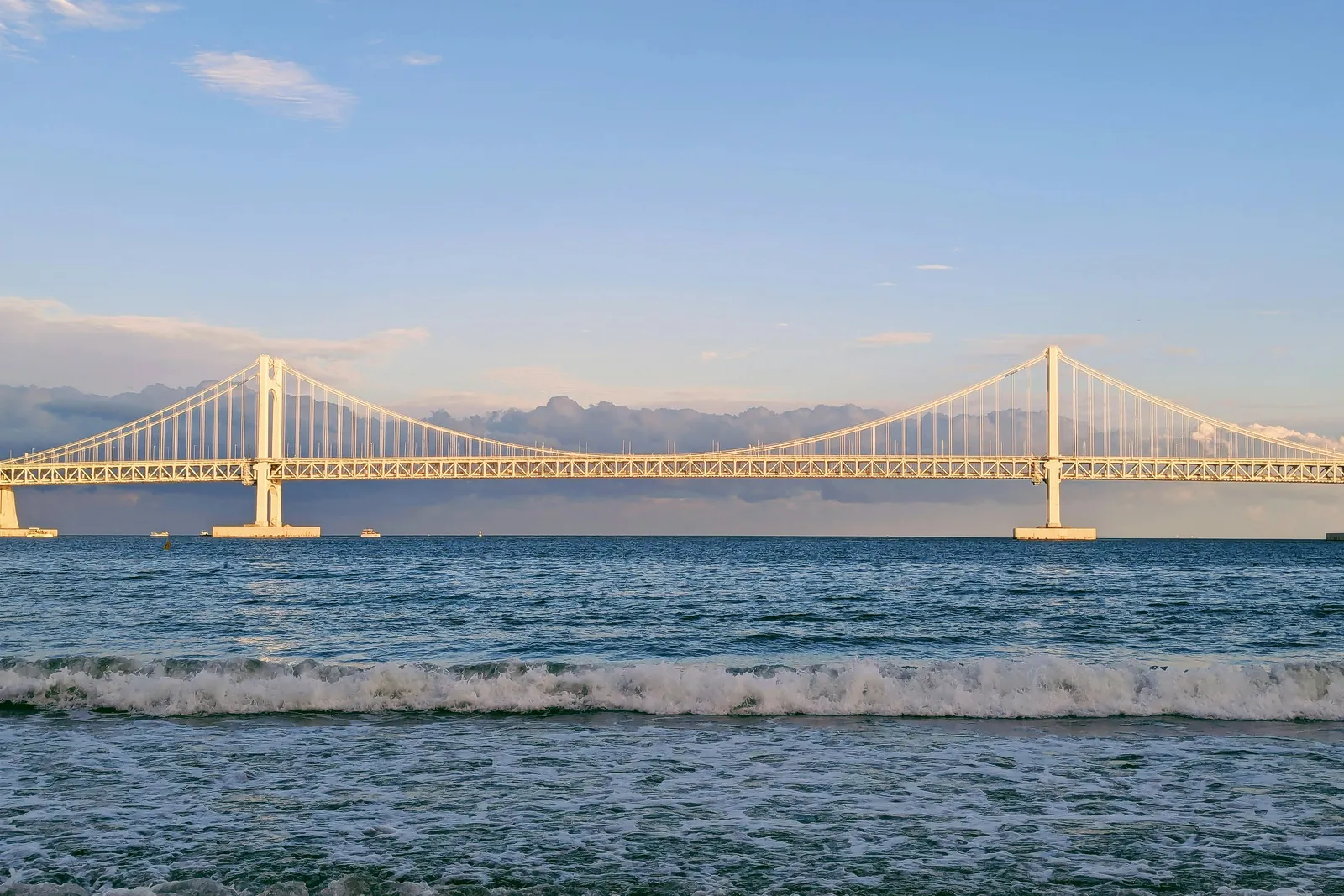 Photo by note thanun on Unsplash
 PLAN THE DAYS
Find things to do in Busan
Once you have picked an area, compare tours, attraction tickets and local experiences against the route you will actually take.
GetYourGuide affiliate link — no extra cost to you
THE DISTRICTS
Browse by theme
- Gijang and Osiria
Three Gijang and Osiria properties compared. Haeundae Beach appears in none of their nearby listings and none has a street to walk out to — so what is on site decides.
- Gwangalli Beach Hotels
Four hotels on Gwangalli Beach, all within 100m of the sand. Every one also sells rooms with no view at all, under four labels — read the full room name before booking.
- Haeundae Hotels
Six Haeundae hotels compared. The beach runs from 50m to 1.1km — a 22-fold spread — and the order for the subway station is almost exactly reversed.
- Nampo Hotels
Five hotels listed under Nampo in Busan, compared. Distance to Jagalchi Market runs from 150m to 1,440m and location ratings from 9.4 to 7.9. Check-in times vary by three hours.
- Seomyeon Hotels
Busan's Seomyeon hotels compared. No coast here, but Gimhae Airport and Busan Station are both close, the walk to the interchange runs 410m to 640m, and child rules differ.
21 hotels in this city Each with its district, straight-line distances and its own page. Ordered by guest score.
- Ananti at Busan Cove
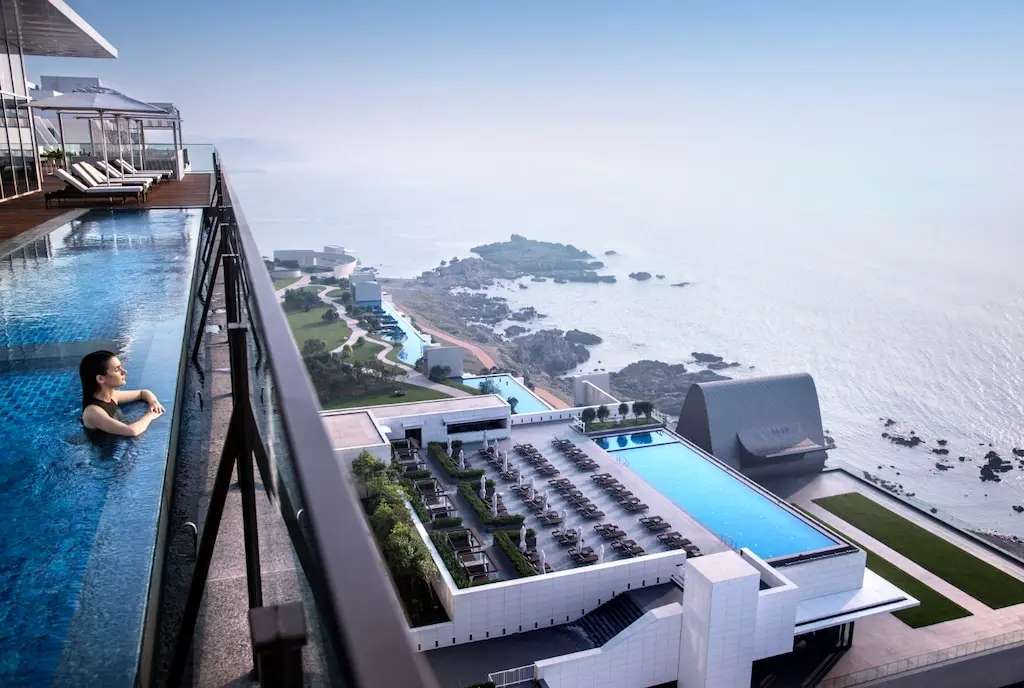
A five-star on the Gijang coast where pools, a sauna, a bookshop and a buffet mean the day never has to leave the grounds. The outdoor infinity pools are seasonal.
- Best Louis Hamilton Ocean Terrace
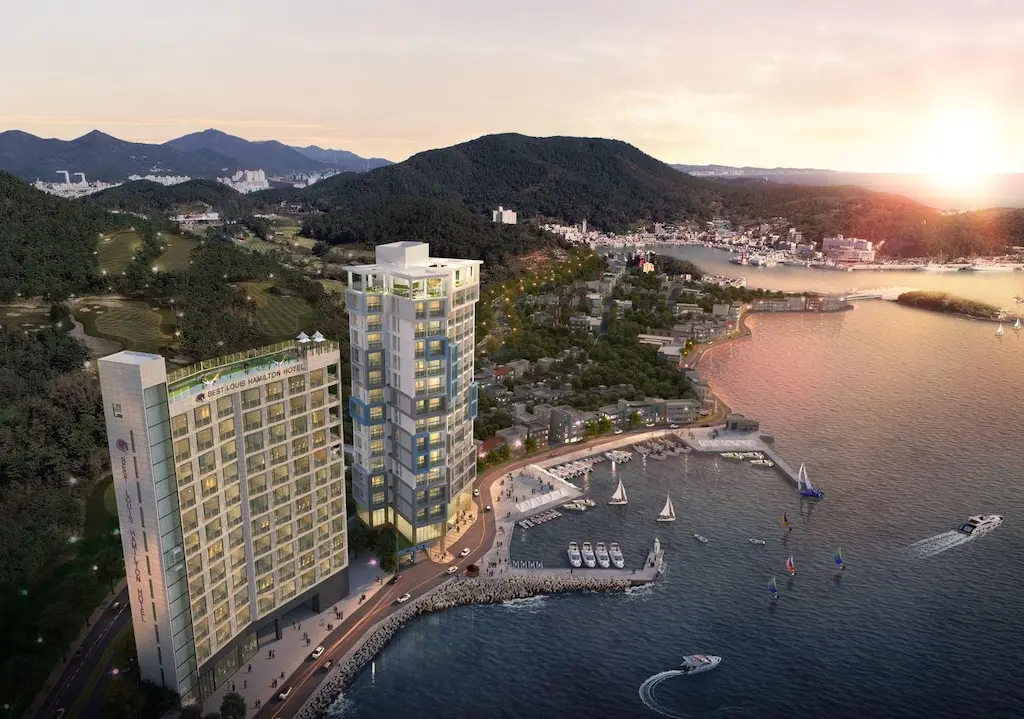
A Gijang coastal property where all four verified room types carry an ocean label and the bath is in the room.
- MATIE Osiria
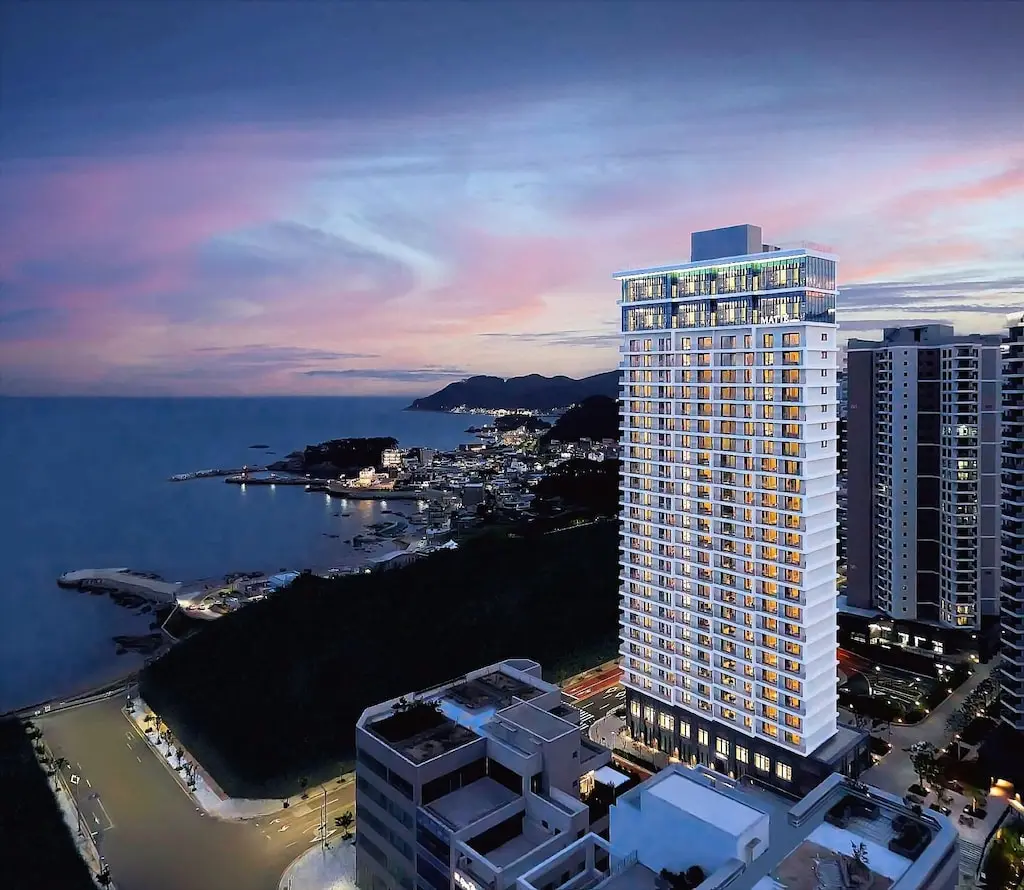
Closest of the three Gijang properties to the temple and the station, with guests describing two bedrooms and two bathrooms in one unit.
- Hotel Aqua Palace
70m from Gwangalli Beach. Almost nothing on this beach road has a pool, a sauna and a gym in the same building, and ages 4–12 stay free. The building dates from 2007.
- Hotel Homers
40m from Gwangalli Beach. The two things reviews repeat are the bridge framed in the window and the size of the rooms. The same reviews raise the soundproofing.
- Hound Hotel Gwangan
60m from Gwangalli Beach, 350m from the subway. Room names split into ocean view and no view — and the reviews keep coming back to the roof.
- Kent Hotel Gwangalli
100m from Gwangalli Beach, with reception and the breakfast room on the 15th floor. Room names split into ocean view, city view and Cinema — and Cinema is not a view.
- Kolon Seacloud Hotel
The closest Haeundae property to the sand, where fourteen room types carry six different descriptions of what the window shows.
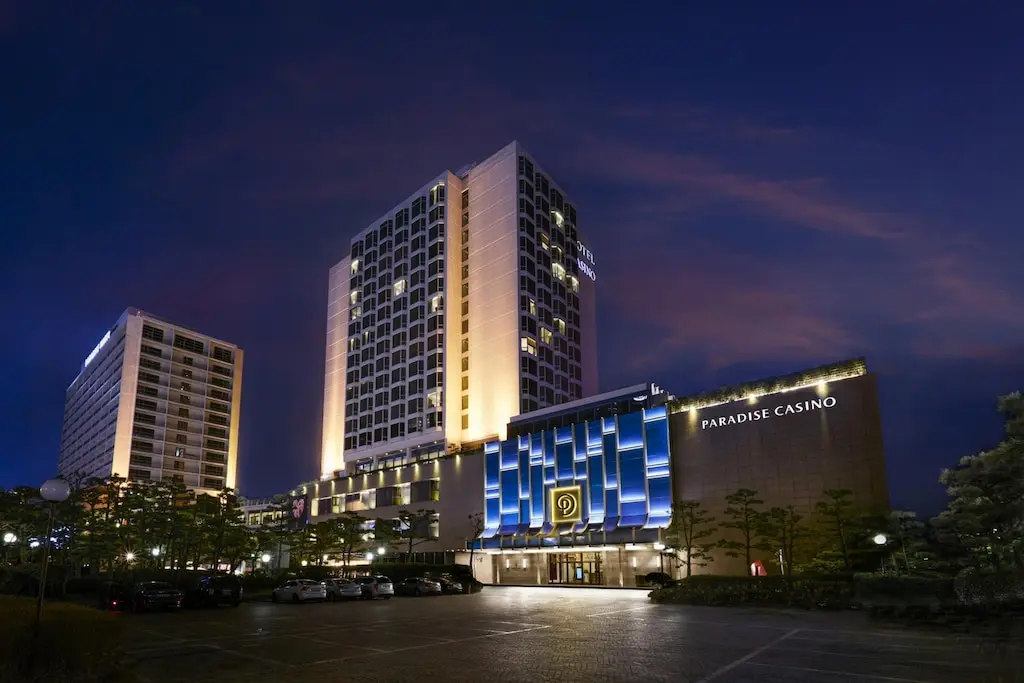
- Paradise Hotel Busan
70m from Haeundae Beach, with a passage guests mention using to walk straight back from the water. The same reviews raise carpet floors, winter heating and a crowded pool.
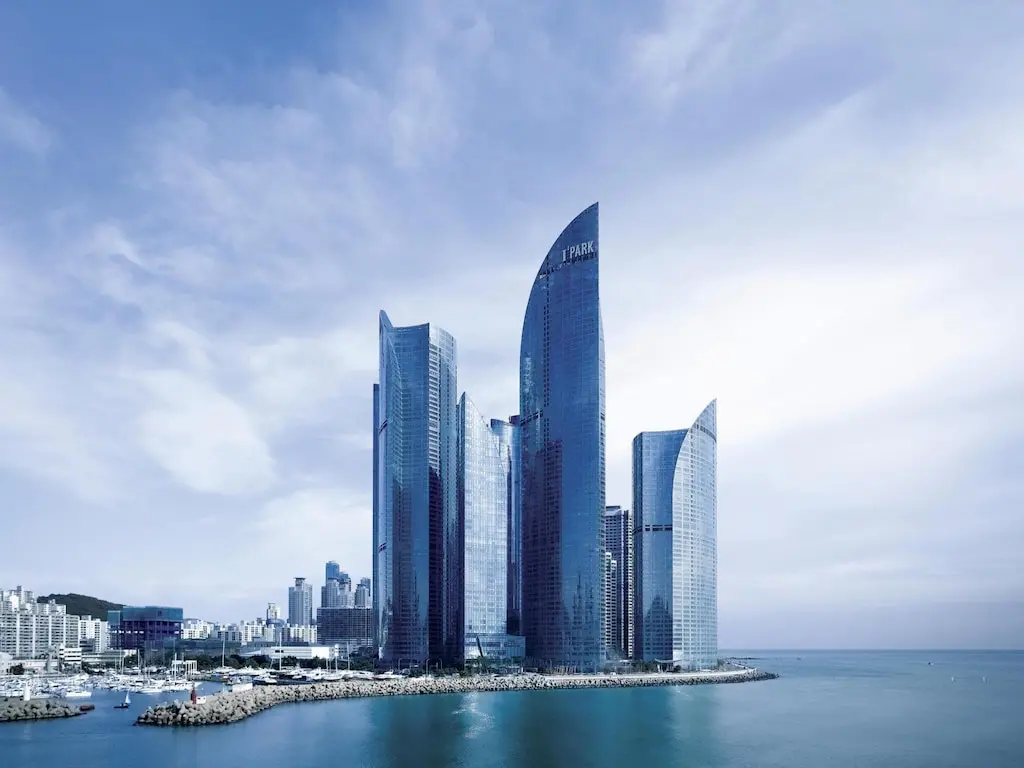
- Park Hyatt Busan
A Marine City address a kilometre off the Haeundae strip, which its guests describe as the point rather than the drawback.
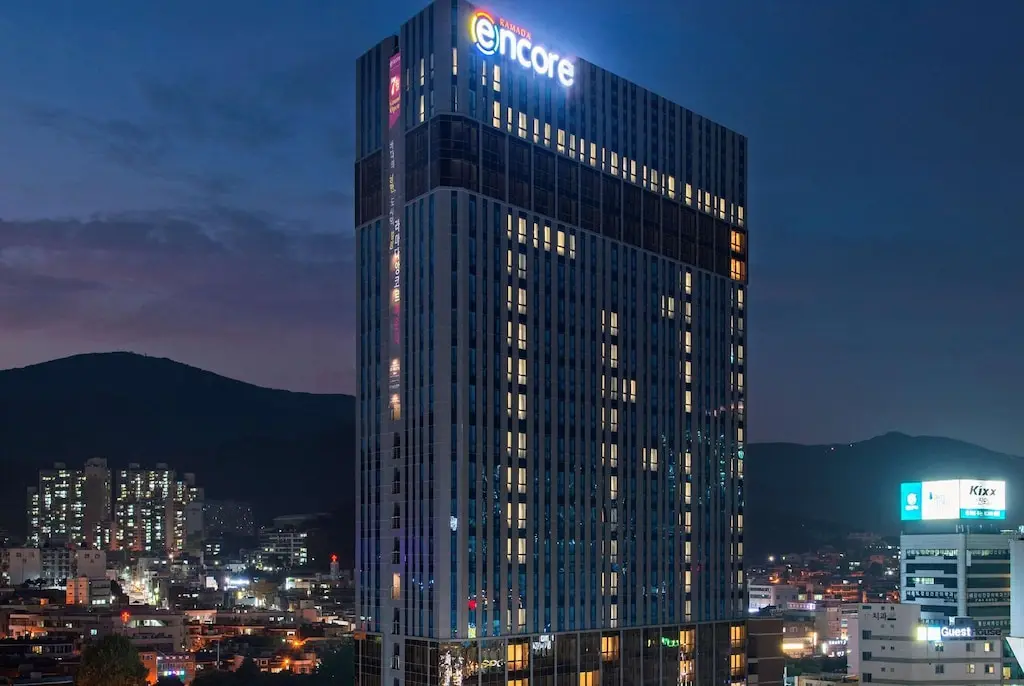
- Ramada Encore Haeundae
Directly outside Haeundae Station exit 3, with a 9.4 location score and the largest review sample in the district.
- Shilla Stay Busan Haeundae
One of the few Haeundae addresses where both the beach and the subway are a short walk. 407 rooms, several family types — and lifts that back up at peak check-in.
- The Westin Josun Busan
50m to the sand at the quiet end of Haeundae. What reviews actually describe is the angle: water and beach in one window, and windows that open onto the sound of the surf.
- Commodore Hotel
Busan Station is 880m away. The location rating is 7.9 — the lowest of the Nampo hotels. That gap is not about distance. It is the hill.
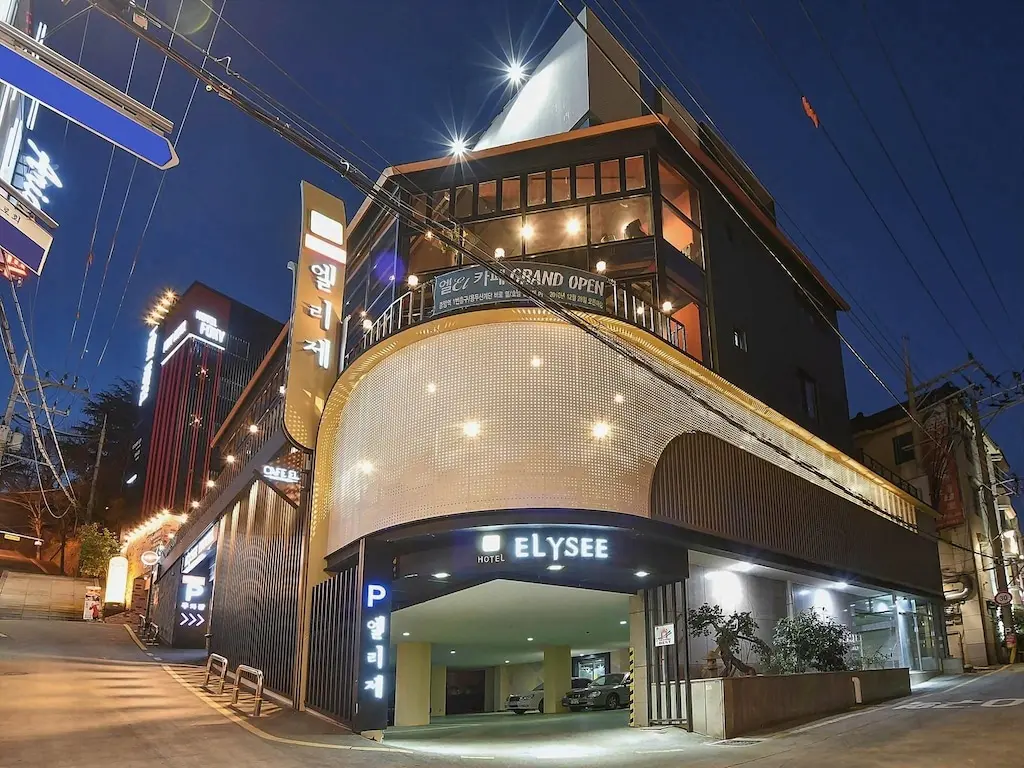
- Elysee Hotel Busan
130m to Yongdusan Park, 350m to Nampo Station. But check-in is 5pm — on a morning arrival you drop the bags and stay out.
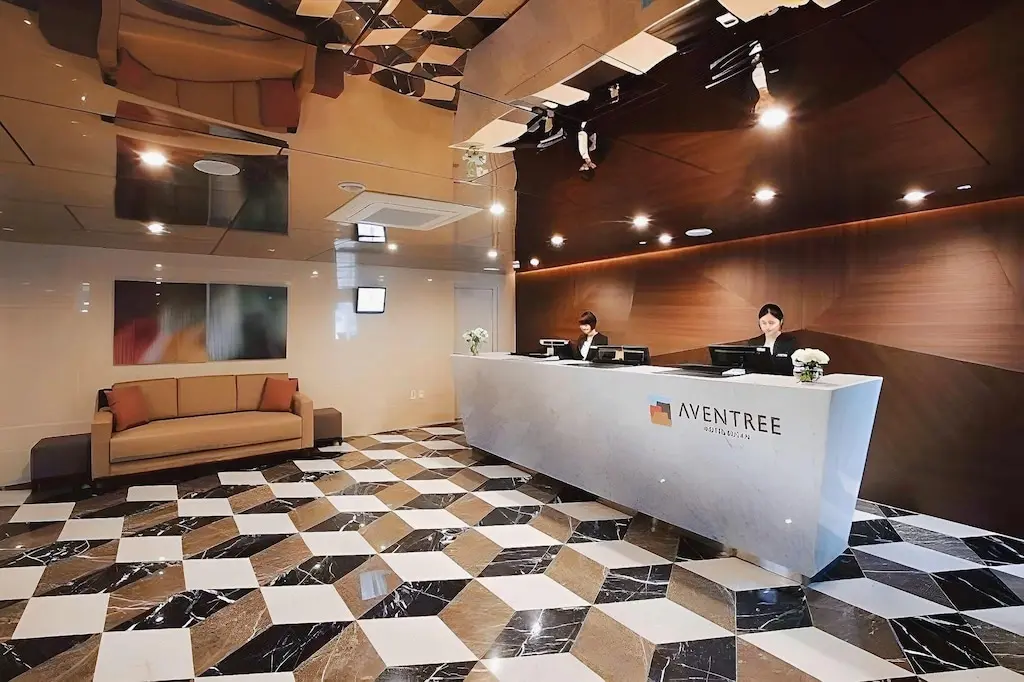
- Hotel Aventree Busan
370m to Jagalchi Market, 390m to Jagalchi Station. Close enough to carry your shopping back, and the lobby has a scale and an airline weight chart so you can check it before you fly.
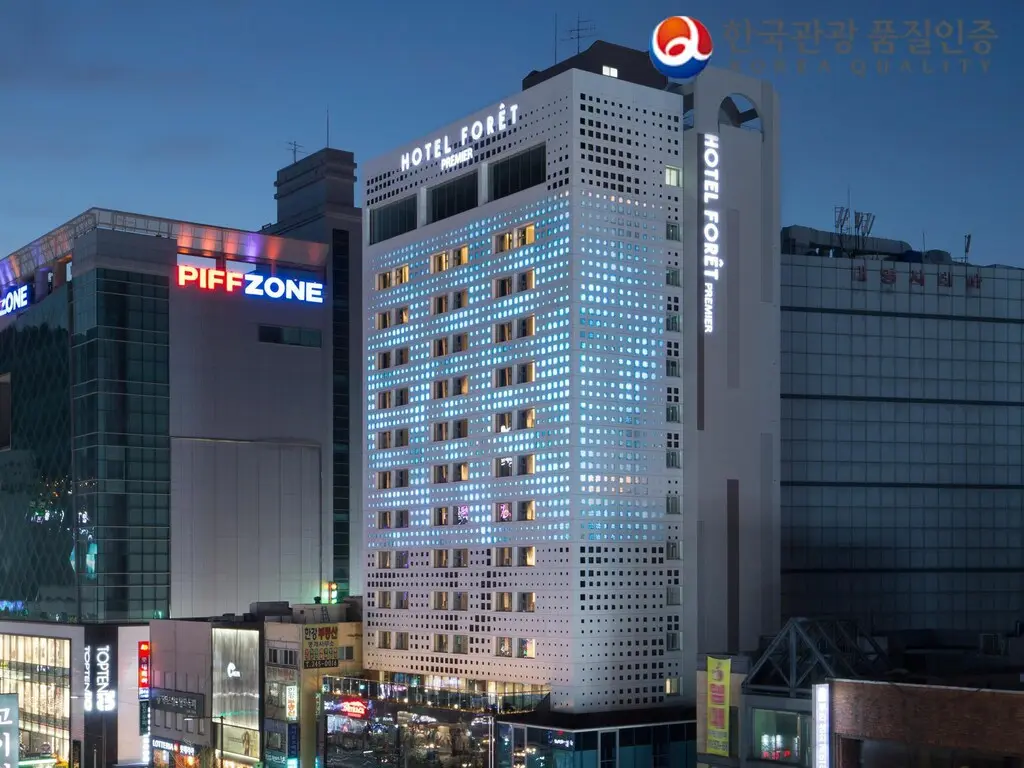
- Hotel Foret Premier Nampo
Jagalchi Market 200m, Yongdusan Park 350m, Busan Tower 380m. The old-city sights sit inside a short walk — but this is a base, not a place to spend the day.
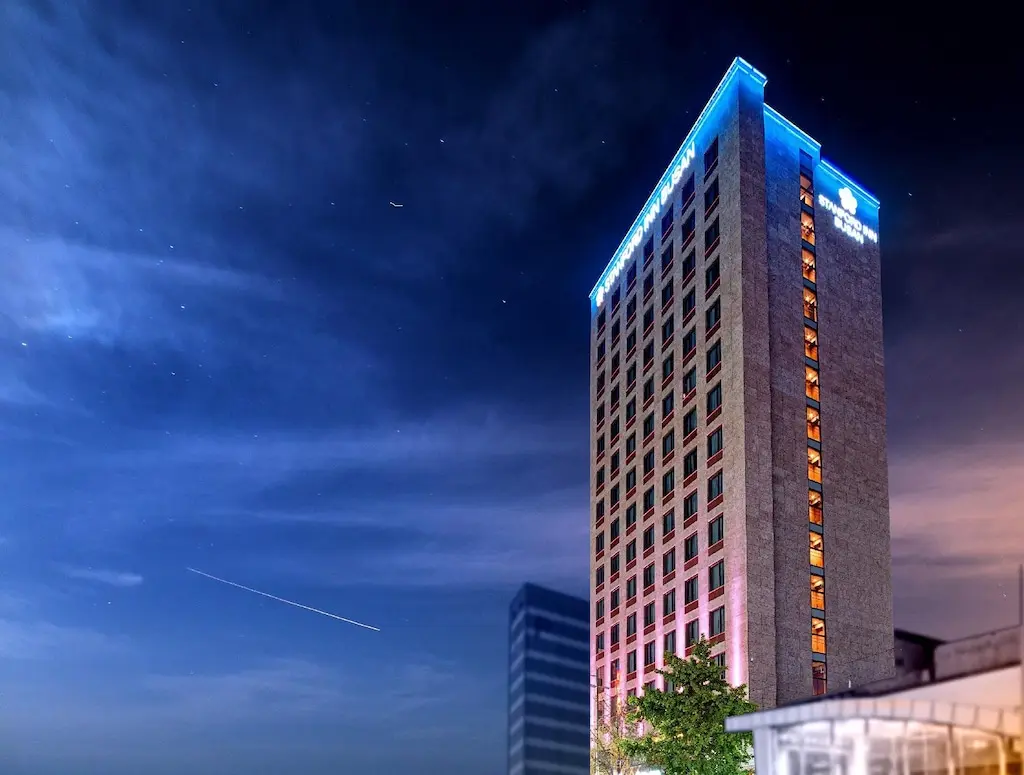
- Stanford Hotel Busan
150m to Jagalchi Market, 300m to the subway. Old Busan is all within walking distance — and here the room name tells you which way the window faces.
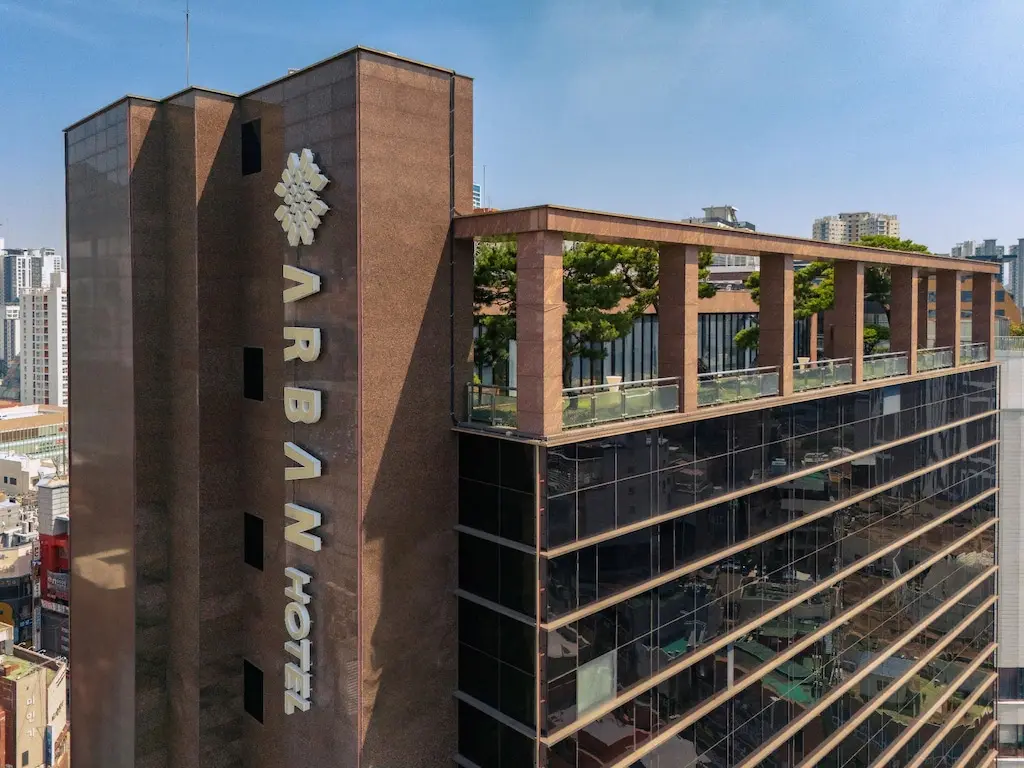
- Arban Hotel Busan
440m to Seomyeon Station, with Olive Young and a convenience store on the doorstep. Everything you need is on the street outside — but the room type you pick decides whether you get daylight.
- Lotte Hotel Busan
410m from Seomyeon Station, linked underground to the department store. The freest position in Busan for getting around — and the one with no beach attached.
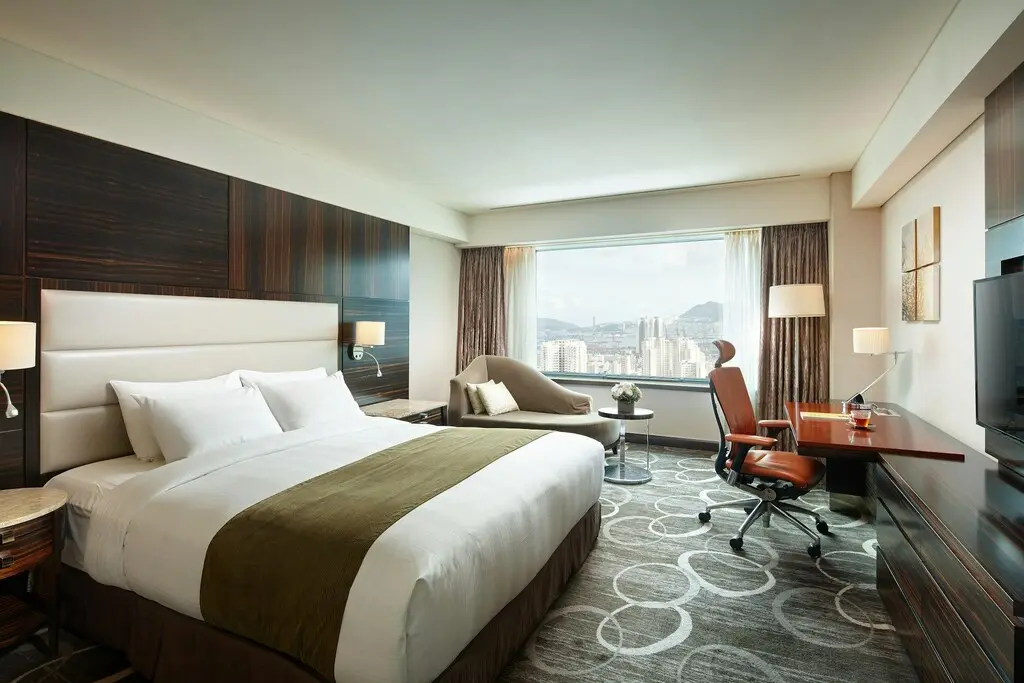
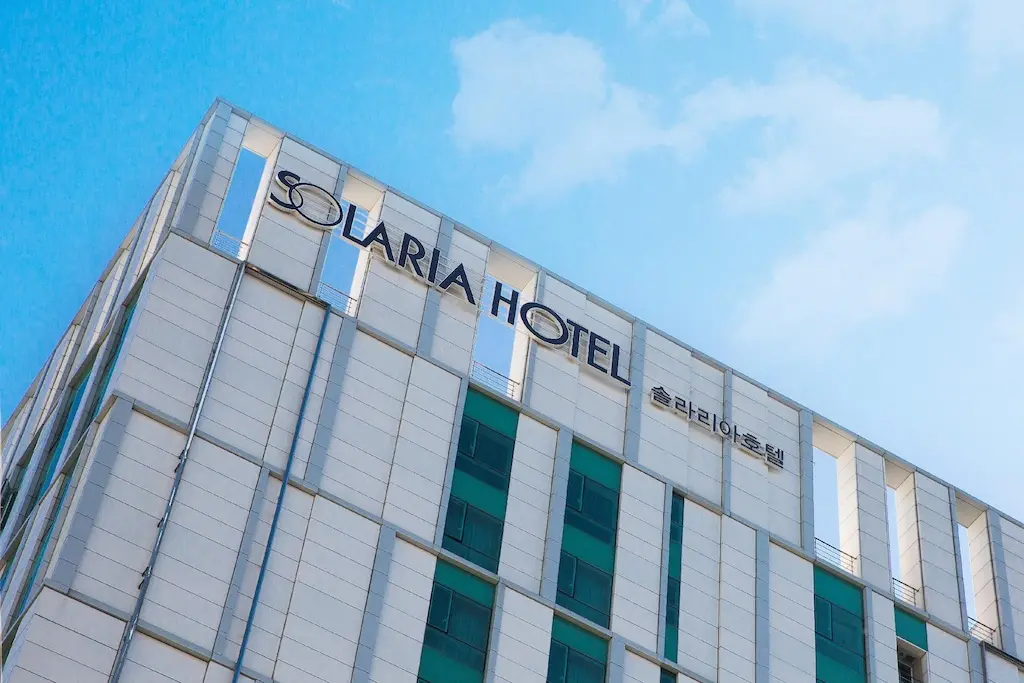
- Solaria Nishitetsu Busan
A Seomyeon address where Seomyeon Station is 640m and Beomnaegol is 560m. The two sit on different lines, so which one you use changes the trip.
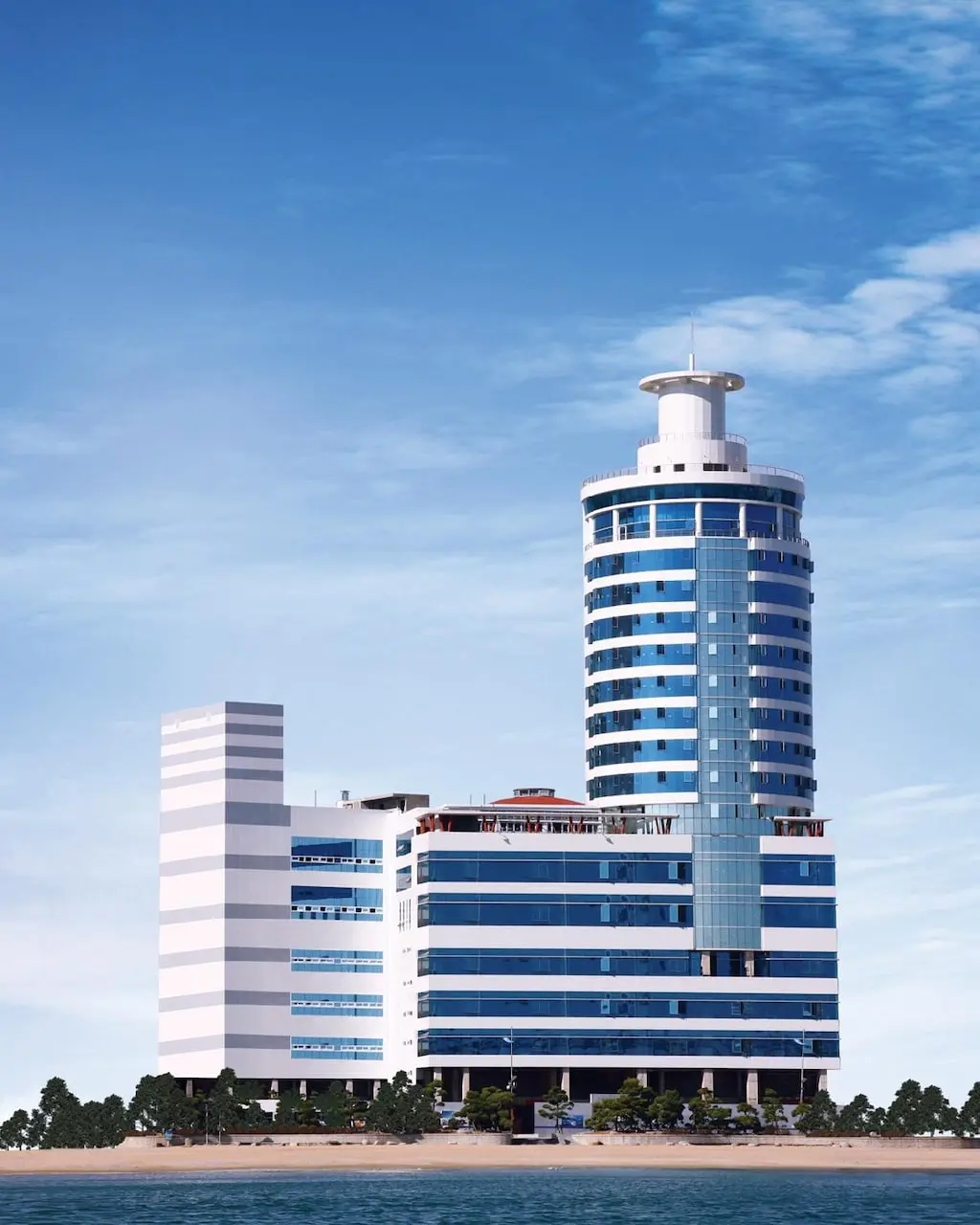
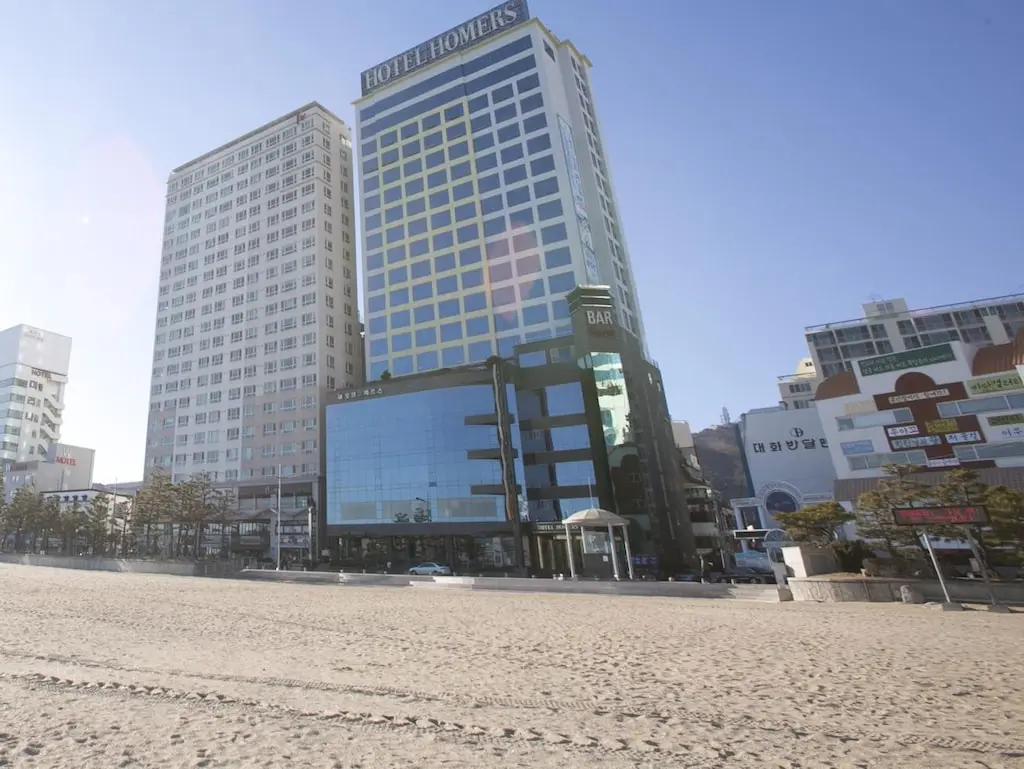
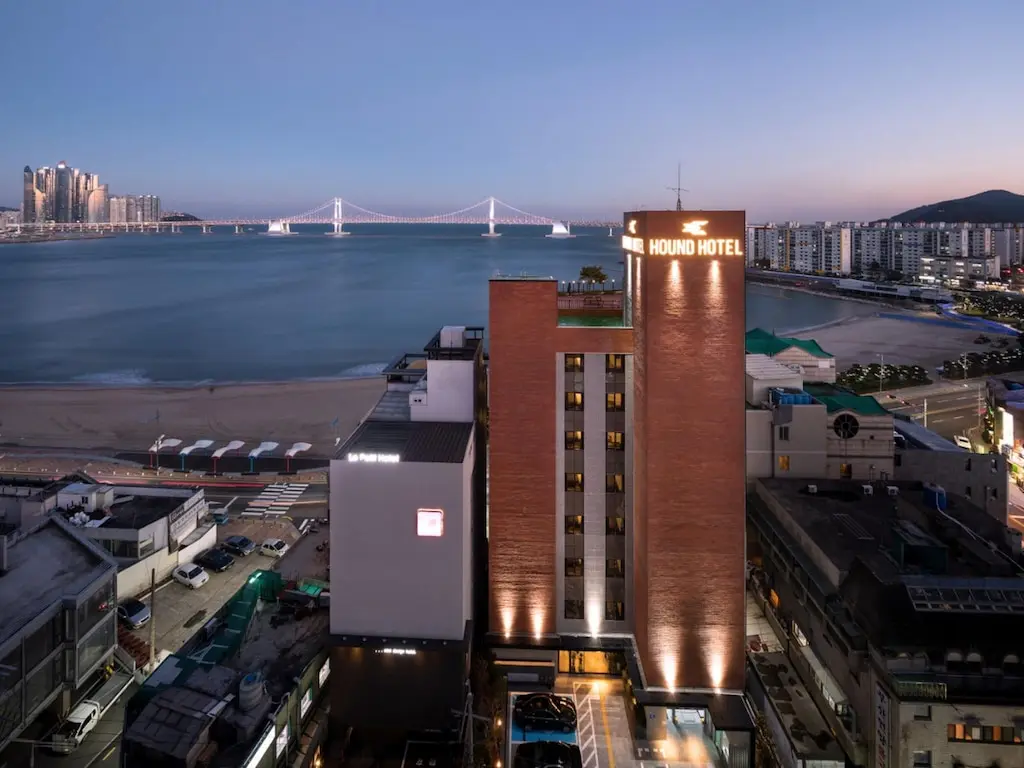
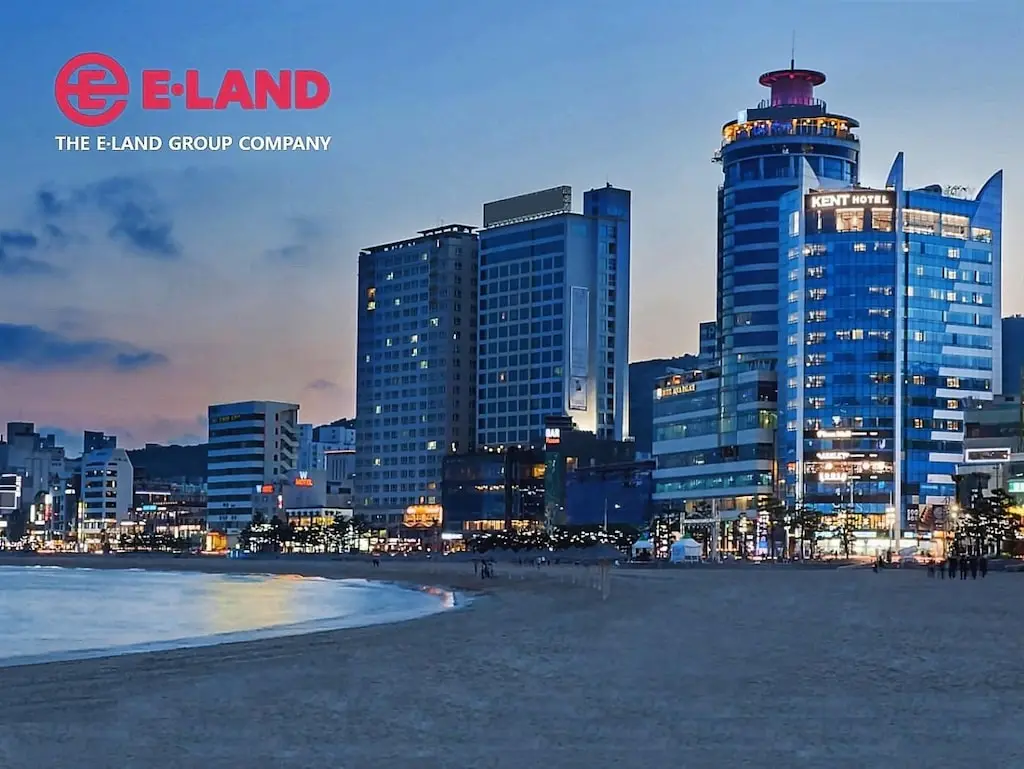
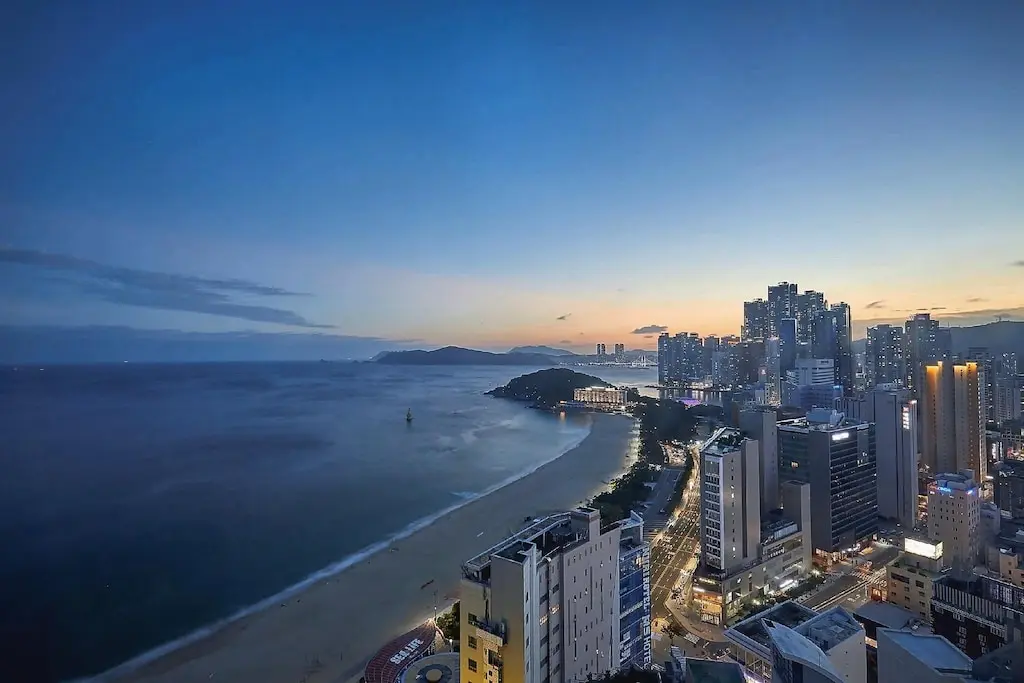
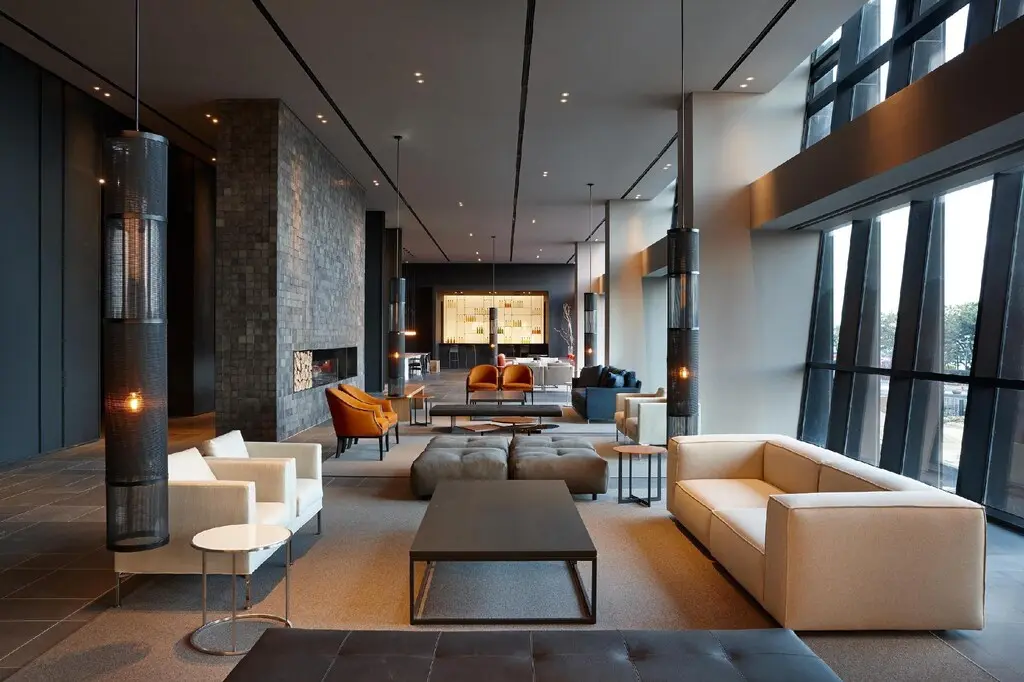
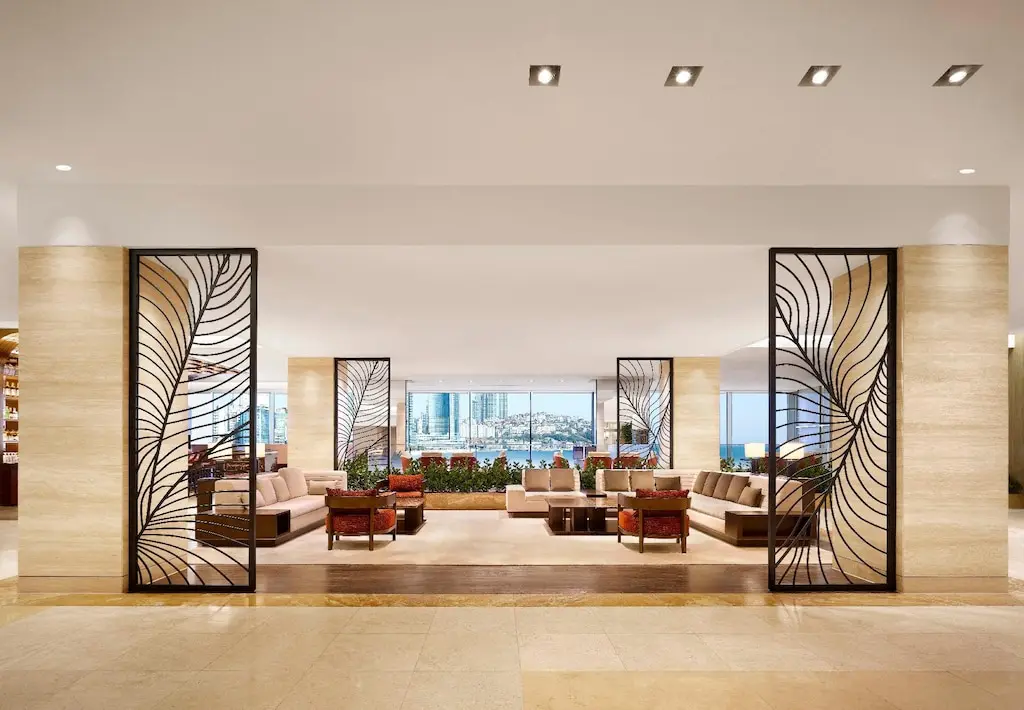
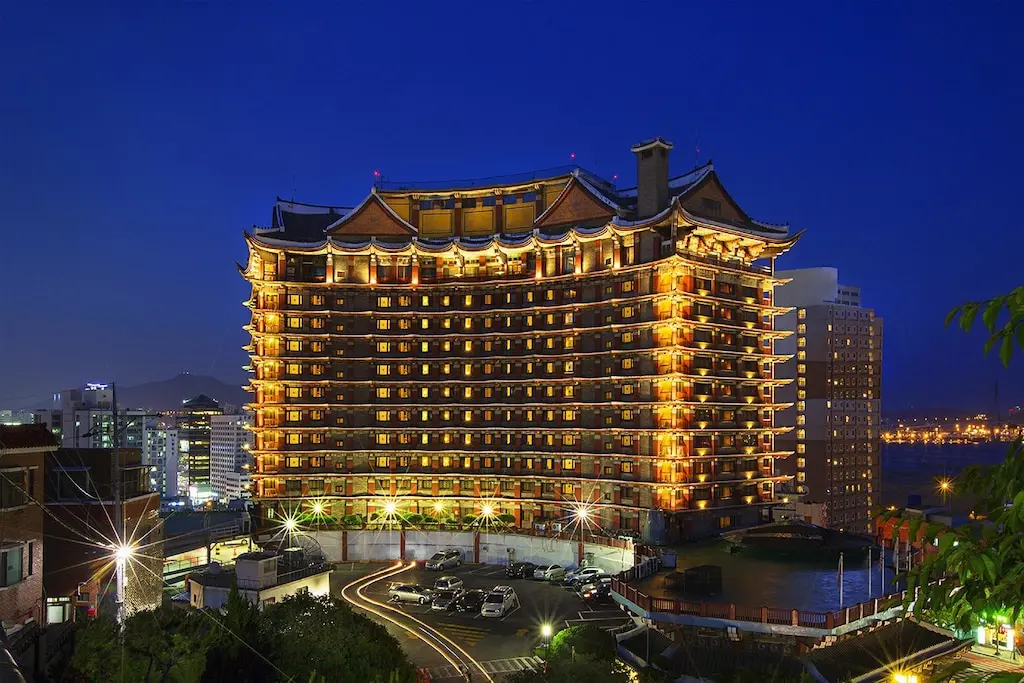
In Busan the first decision is not which hotel. It is whether you sleep next to the water or next to a subway interchange. The network here is thinner than Seoul’s, so that one choice sets how much of each day you spend travelling.
The numbers make it plain. Hotels within walking distance of Haeundae Beach sit 19–20km from Gimhae International Airport; the Seomyeon hotels are 10.1–10.4km. Turn it around and Seomyeon registers no beach at all in its nearby data, with Jagalchi Market at 6.7–7.1km. In Busan, water and mobility trade against each other.
How we choose the stays on this list
- Actual distance to the sand — 40m and 1km are different evenings
- Whether that beach is open on your dates — Busan’s beaches run different seasons
- Distance to the nearest station, and whether that station is an interchange
- Distance and quoted transfer time to Gimhae Airport, which nearly doubles between districts
- Whether a sea view is a separate room type — in Busan it usually is
- Realistic occupancy above two people, and the age at which children stop staying free
- Drawbacks raised repeatedly across guest feedback, not by one reviewer
The districts
Haeundae is the default, and it earns that. In 2026 the beach runs 26 June to 15 September, 82 days — the longest season in the city. In exchange, Gimhae Airport is around 19km straight-line away.
But “a Haeundae hotel” is no longer one thing. Across the six properties covered here the beach runs 50m to 1.1km — a 22-fold spread — and the order for the subway is almost exactly reversed. The property closest to the sand is furthest from a station; the one 80m from a station is fifth on the beach. Which of the two you use every day is the first question in this district, and the numbers are laid out in Haeundae hotels compared.
Gwangalli is not really about the beach. It is about the bridge: the Gwangan Bridge sits 1.3–1.4km offshore, something you look at from the room and the sand rather than walk to, and that view is what reviews return to. The sand is 40–60m away, but the nearest station runs anywhere from 350m to 670m — worth settling first if you plan to ride the subway daily. It shares a coastline with Haeundae but not a walk. Its beach season is shorter — 1 July to 31 August in 2026 — though the bridge at night keeps working regardless, so closing day costs less here than it would elsewhere.
Seomyeon is the freest position in the city for moving. Subway lines 1 and 2 cross here, so Haeundae runs one way and Busan Station and Nampo the other, and Gimhae Airport at 10.1–10.4km straight-line sits alongside Busan Station at 4.4–4.8km. What it does not have is the sea. It wins when a single day takes you to two places on opposite sides of the city, and it loses when your evenings are meant to end on a beach. How the walks and the child rules differ within it is set out in the Seomyeon hotel comparison.
Nampo buys density on foot. Jagalchi Market at 150–200m, Yongdusan Park at 350–390m and Busan Tower at 380–420m all sit inside roughly a 400m radius, with two line 1 stations walkable and Gamcheon Culture Village 1.8km away. The trade is quiet: this is the middle of a market district.
Gijang and Osiria is the outlier, and worth stating plainly: for all three properties there, Haeundae Beach does not appear in the nearby listings at all. What appears instead is Haedong Yonggungsa Temple and Osiria Station, with Gimhae Airport around 25km — some 6km further than the Haeundae hotels. None of the three has a street to walk out to.
That is the premise rather than a flaw. It is the district for a stay that happens on the property, and what is on site decides it — several pools (the outdoor ones seasonal) at one, two bedrooms at another, an ocean view from every room at the third. See Gijang and Osiria stays.
The districts with stays written up here are Haeundae, Gwangalli, Seomyeon, Nampo, and Gijang and Osiria. Busan Station and Centum City are not included — we do not introduce a district we have no verified stays in.
Why Centum City is not filed under Haeundae
The usual mistake when dividing Busan is using the administrative district. Group everything under Haeundae-gu and a hotel 50m from the sand shares a label with one in Centum City 2.5km away. Properties around Centum City Station register Gwangalli Beach at roughly 1.5km and Dongbaekseom at 2.5km, and Haeundae Beach does not appear in their nearby list at all.
What you can walk to differs, and so does what you can do in the evening. So on this site Haeundae means the beachfront walking radius, and Centum City will get its own stay area if and when we cover hotels there.
Worth knowing about Busan
In early September the two beaches are in different states. For 2026, Haeundae runs 26 June to 15 September and Gwangalli 1 July to 31 August. Arrive in the first half of September and Haeundae is still open while Gwangalli has closed. That the city extends only Haeundae into mid-September is itself the signal that people are still swimming then — which puts this ahead of station distance or the bridge view when you are booking those dates.
Closing does not mean the sand is off-limits. It means lifeguards and beach facilities stop. If you are there to walk and look, the season barely matters; if you are there to swim, these dates are the line. Councils set them afresh every year, so check the notice for your travel year.
A sea view is a room type, not a hotel. The same property will list ocean-view and city-view versions of the same room, and sometimes more of the latter. If the water or the bridge at night is your reason for booking, read the room name rather than the hotel name.
The age at which children stay free varies by property. Across the hotels covered here it runs 0–11, 0–12, 3–12, 0–6, 1–5 and 0–2, plus one where children never stay free. Some count guests as adults from six or seven, others from 13, with extra beds chargeable — which reorders the totals depending on your child’s age. At least one leaves children’s breakfast out of breakfast-inclusive rates. We note the rule on each hotel page rather than generalising.
The airport distance nearly doubles across the city. Seomyeon 10.1–10.4km, Nampo 11.3km, Gwangalli 15.5–15.8km, Haeundae 19–20km. On a short trip with a late arrival or an early departure, that gap is your first and last day.
Pairing Busan with Seoul
The two cities are linked by high-speed rail, and a lot of trips take in both. When they do, which station you are near in Busan moves together with your Seoul choice: staying near Seoul Station puts the intercity train in the same building, and in Busan line 1 runs to Busan Station. The Seoul districts are compared in Where to Stay in Seoul.